Kyoko Estate Theme

How to Start Your Housing Search in Japan and Find the Right Agent

Navigating the Rental Market Wisely

Moving to Japan is an exciting step, but finding a place to live often becomes far more complicated than many people expect. This is especially true if you are unfamiliar with Japan’s language, systems, and rental customs as well as how the rental industry actually operates.

Unlike in some countries where you can search, apply, and sign a lease entirely online on your own, the Japanese rental market is highly agent-driven and shaped by industry-specific practices that are not always visible from the outside. Understanding these realities is key to avoiding unnecessary frustration, delays, and missed opportunities.

In this article, I take a closer look at how the Japanese rental market really works,

from the very first step of finding a property, along with the role real estate companies or agents play behind the scenes and what first-time expats should know to avoid regret later.

Pros and Cons of Your First Housing Search Options

Compared to Japanese renters, foreigners often start with a disadvantage in terms of information and local knowledge. That’s why it helps to understand some key characteristics of Japanese real estate companies, so you can make decisions you won’t regret, and avoid unnecessary losses or frustration.

First, let’s walk through the typical options people use to begin searching for housing in Japan.

Option 1: Start with Online Property Search Portals

When you start your home search in Japan, it’s only natural to search online with phrases like ‘Real Estate Agent in Japan’ or ‘Apartments for rent in Japan.’ You’ll quickly find a vast array of companies and websites catering to your search.

The major Japanese portals

When Japanese people search for rentals, the most common portals they use are athome, HOMES, SUUMO, etc. You can think of them as similar to Zillow in the U.S.

These sites are designed primarily for Japanese users, so the information is mostly in Japanese. However, even if you don’t read Japanese, you can still browse and search using automatic translation, so it’s possible to use these platforms to find listings.

English-based platforms for foreigners

There are also portals that are fully in English, such as Wagaya Japan and GaijinPot. These sites target foreign residents, so the listing information is originally provided in English.

What happens after you inquire about a listing

On any of these platforms, once you inquire about a property, the real estate company that posted the listing will respond to you individually. This is often where a key challenge begins.

Many real estate companies listing on Japanese portals cannot provide service in English.
So if you’re not confident in Japanese, this can be a major barrier.

On the other hand, companies that post on foreigner-focused platforms actively want to work with foreign clients. In that sense, contacting companies through these English portals can be a good way to find an agent who can support foreigners.

Problems with relying only on portals

However, there are limitations to this approach too:

  • Japanese listing portals are the go-to choice even for Japanese, but not every available home makes it onto these sites. (Because posting listings requires real estate companies to pay fees.) To access a wider range of options, it’s best to have an agent run a comprehensive search for you.
  • Although you can filter listings by rent and area, if you don’t know the neighborhoods well, you may not be able to narrow down your search and may feel lost trying to search on your own. In some cases, you might be drawn only to property photos and end up looking at listings in areas that don’t actually suit you.
  • On Japanese portals, not all the properties are available to foreigners (“foreigner-friendly” is sometimes stated but the opposite is rarely stated.)
  • Foreigner-focused portals usually include listings from only a limited number of real estate companies. Again, those companies choose which listings to upload, so the selection is limited. It’s a limited set of properties, from a limited set of companies.
    The upside is that at least these listings are usually foreigner-friendly.
  • Also, please keep in mind that rental properties move quickly, and a listing may no longer be available by the time you inquire.

Option 2: Contact a Foreigner-Friendly Real Estate Company Directly

Another approach is to directly reach out to real estate companies that advertise support for foreign clients. You’ll still find many options, so you might choose one or if you have the time and energy, you could contact several at once.

Things to keep in mind

One key point is whether the agency actually covers the specific area you want to live in.

Also, many “foreigner-specialist” agencies focus primarily on central Tokyo, where the international community is concentrated and rents tend to be higher. Some also target the luxury market, as their typical clients are expats with generous corporate housing budgets.

Therefore, it’s a good idea to check an agency’s typical price range and coverage area first to make sure they are the right fit for your search.

Option 3: Walk Into a Local Neighborhood Real Estate Shop

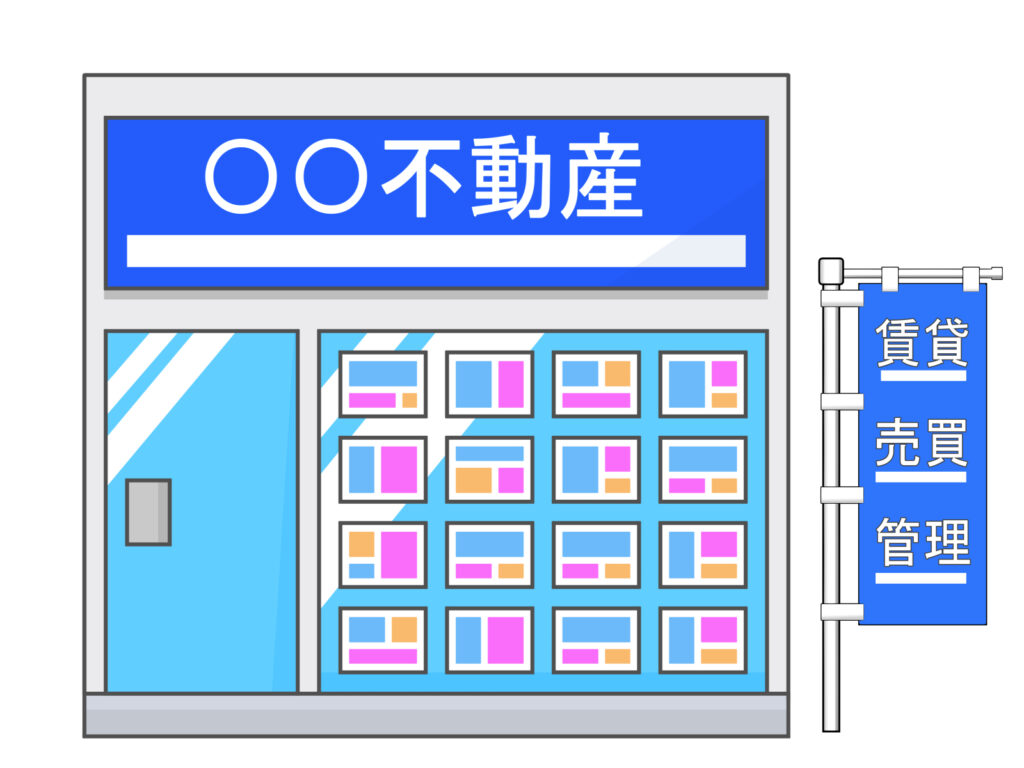
A third option is to visit real estate shops in the neighborhood directly.
Why this can be helpful

Local agencies are rooted in the area. They often have relationships with local landlords and may be able to introduce many properties within that neighborhood. In most cases, they are available for walk-ins, but they can be busy at times. To make the most of your visit, and if you want to discuss your situation in detail, it’s better to contact them in advance. In some cases, they may even sit down with you and search for properties together on online portals.

The downside

Unless it’s an area with a large foreign population, local agencies often are not used to working with foreign clients, and they may not handle “foreigner-friendly” properties. To be honest, bridging the language barrier takes extra effort for them. On top of that, since many landlords still say ‘no’ to foreign tenants, the search can be quite time-consuming, which, unfortunately, means some agents are hesitant to take on the challenge.

Given these realities, it’s most practical to either look for foreigner-friendly agencies online or get a personal recommendation from someone who has gone through a similar experience.

If You Found a Property You Like, What Happens Next?

So, let’s get back to the starting point.

When you use a listing portal and find a property you’re interested in, what happens next?

When you inquire through any of the portals, the real estate company that posted the property responds, and if the property is still available and you want to view it, they start coordinating viewing dates. This is where your communication with the company really begins.

But here’s the question:
Just because you liked one listing and contacted that company,

Is that company really the right one for you?

If the property is a perfect fit and everything goes smoothly, that’s great.
After you see the property in person, you may feel like… “Hmm… not sure.” And if you don’t know Japan’s housing standards or common trade-offs, you might not even be able to judge whether a property is truly good or not.

This is where working with the right agent becomes essential to avoid regret later.

Naturally, the next question is how to find a good agent.

Important Cautions When You Rely on a Real Estate Company

Before getting into how to find the right agent, let me briefly explain how the Japanese real estate industry works.

When browsing property portals, you may notice that while the company name is shown, the individual agent’s name is rarely displayed.

In Japan, independent agents are still relatively rare. Most “agents” work inside a company organization. That means they may move based on internal company logic, logic you may not know about unless you understand how Japanese real estate companies operate.

If you don’t know this, you could end up making costly mistakes or feeling pressured into a decision that isn’t right for you.

Even if you contact a company because of one specific listing, that company may not necessarily be the best match for you.

Here’s something many first-time expats don’t realize, and your agent doesn’t tell.

Common issues to be aware of

  • If the company also manages properties, they are more likely to introduce their own managed units first. That can mean you may not receive broad options. Even if you don’t love what they show you, you might hear something like, “We don’t have any other options to show you.”

  • Many agents are driven by efficiency and commission logic.
    Some real estate agents want to close deals with less time and effort, and want to work on higher-rent properties. This pressure can be stronger for agents working inside a company structure (not always, but it happens).
    In companies with a strong efficiency-driven culture, they may not patiently search for the best match for your needs. You may feel they keep recommending only expensive units. It can also happen that they only show listings where the company earns a better commission rate.
    (That said, I have worked with many real estate companies as both a professional and as a property owner, and I can say there are also sincere and honest agents.)

  • The person helping you may not be a licensed professional.
    In Japan, there is a qualification called 宅建士 (Takken-shi), a national real estate transaction specialist license.
    However, the “agent” who assists you may not necessarily be licensed. In some cases, the person handling your case may have very limited knowledge or experience.
    Legally, even without the license, they can still do client communication, property tours, and contract preparation.
    But real estate contracts in Japan can be extremely detailed, with property-specific conditions and different clauses depending on the unit. To handle these transactions smoothly and safely, it’s clearly better to work with an agent who has the 宅建士 qualification from the start.
    I highly recommend confirming whether your agent holds the license.

  • You often don’t know who your assigned person will be.
    While some listings may display a specific contact person, in most cases, the company simply assigns someone internally once you inquire. This means you won’t know exactly who will be responding until you hear back from them.

  • Some agents don’t aim to build a long-term relationship with clients.
    This industry often has high turnover, and it’s common for the mindset to be: “This is a one-time transaction.”

Which Agents Can Show You the Most Options?

When looking for a real estate agent, most people naturally assume that the best choice is a company or agent with access to the largest number of listings.

That assumption makes sense. After all, more listings should mean more options, right?

However, what many people don’t realize is that in Japan, the actual number of properties an agent can introduce is largely the same, regardless of the company or agent you contact.

Why Listing Volume Is Not the Real Differentiator

In Japan, there is a professional property information-sharing system used among licensed real estate companies to ensure transparency and fairness in transactions.

For property sales, listings are generally required to be registered in this system, meaning they are broadly accessible to other real estate companies.

For rental properties, registration is not legally mandatory. Given how quickly properties move and the specific requirements of landlords or agencies, not all the properties make it onto this platform. That said, from a landlord’s perspective, vacant units mean lost income. As a result, a large portion of rental listings are still shared through this professional network so that tenants can be found quickly.

Although as mentioned earlier, some properties are managed exclusively by a single company and are not available through other agencies, but In practice, most rental properties can be introduced by almost any real estate company.

So the real question is not:

“Which company has more listings?”

But rather:

“Who will represent your interests best?”

How to Choose the Right Agent

Now that you have a better understanding of how the industry works, let’s get back to the core point.

So how do you actually choose a good agent?

1) Choose an agent who listens carefully and helps you clarify what you want

You may not have a clear picture of your life in Japan yet. Your preferences may still be vague.
A good agent will listen carefully, help you shape your needs into something concrete, and work to bridge the gap between your expectations and Japan’s real housing realities.

Because you may not be familiar with Japan, it is important to work with an agent who can proactively point out and advise on issues that foreigners often overlook even if you don’t know to ask about them.

2) Find an agent who will truly spend time searching for you

Agents usually search through the professional platform that mentioned above. The platform can narrow down options using detailed conditions and filters.

But here’s the key:
How agents adjust the conditions, change search patterns, and refine the search takes experience and a strong “search sense,” as well as a deep understanding of your preferences.

You can often tell the quality of an agent by whether they’re willing to spend real time doing this work for you, trying different angles, not giving up, and genuinely making an effort to find good matches.

Choose someone who gives you the feeling:
“They’re really trying to find something for me.”

3) Choose an agent with the 宅建士 (Takken) license

As mentioned above, real estate contracts in Japan are detailed and can vary by property. For peace of mind, it’s highly recommended to choose an agent who holds the 宅建士 qualification. Holding a Takken-shi license indicates that the agent has the skills to accurately interpret detailed property conditions, contractual terms, and important points to be aware of.

4) Avoid agents who are driven by company convenience

If the agent is forced to push the company’s own managed properties, or if they prioritize speed and efficiency over your needs, you may not get the best options.

Choose an agent who is willing to take time, listen carefully, and offer a broad range of choices—even if it takes effort.

5) Choose an agent experienced with foreign clients

Contracts with foreign clients require both specialized know-how and additional effort.

It’s important to choose someone who:

  • understands Japan’s real estate customs and practices
  • has a deep understanding of how to handle transactions with foreign clients,
  • understands the points that tend to confuse foreigners,
  • and can explain them clearly.

6) Choose an agent who can negotiate in Japanese, not only in English

Your agent will communicate and negotiate with the real estate company or agent on the landlord’s side, handling all discussions related to conditions, applications, and coordination on your behalf.

For this reason, it is essential to work with an agent who can communicate effectively with Japanese real estate companies in Japanese.

Furthermore, in Japan, the final decision on whether a tenant is accepted is made by the landlord. While in-person interviews are now rare, individual landlords almost always ask, “What kind of person is the applicant?” They want to know aspects that documents alone cannot show such as whether the applicant seems reliable, responsible, and trustworthy.

From the perspective of the landlord’s real estate company, introducing a problematic tenant can damage their relationship with the owner. As a result, if they have any concerns, they may communicate those concerns to the landlord.

Given this reality, it is highly advantageous to have an agent who can represent you effectively and create a positive impression from the very first inquiry. An agent who presents you clearly and professionally to the other real estate company can increase the likelihood of receiving the landlord’s approval.

7) Choose an agent who knows the area you want to live in and Japanese housing realities

There are many things you simply can’t understand from numbers, photos, or listings alone, such as:

– what a neighborhood actually feels like
– what types of residents tend to live there
– the overall “class,” atmosphere, or vibe of the area
– and the real pros and cons of specific buildings and unit layouts

An experienced agent will visit properties in person and pick up on both positive and negative details that are easy to miss. This includes the atmosphere of the residents, the demeanor of the building manager, potential concerns related to surrounding buildings, as well as unexpected conveniences.

To properly recognize and interpret these factors, it is essential to find an agent who is deeply familiar with Japanese culture, local customs, and day-to-day living in Japan.

Find an agent who can see beyond the numbers and listings, and who can interpret these details through a deep understanding of Japanese culture and local living conditions.

Why Not Try Working with an Independent Agent?

When foreigners search for housing in Japan, they often have limited information and limited access to insider knowledge. That’s why finding a trustworthy agent is the first step to finding a home with less stress.

If you rely on a company you contacted through a portal listing, you may face the issues described above—and you can’t always tell whether they’re truly acting in your best interest.

So why not try finding an independent agent?

About Me: An Independent Agent in the RE/MAX Group

I belong to the RE/MAX group, but I am a fully independent agent.

Because I am not employed by a company, I don’t recommend properties based on company convenience or internal priorities. I will never push a property that doesn’t benefit you.

I have been involved in real estate for a long time, and I have personally experienced many different stages myself including renting, moving overseas, purchasing, and selling.

I was born and raised in Tokyo, so I know Tokyo extremely well.

I genuinely love looking at homes, and when I see property listings, I naturally start imagining what life there would be like

I also deeply understand or at least try to understand how challenging it can be for foreigners to live in Japan, because I have lived abroad myself as an expat.

When you relocate, it’s natural to have many small but important questions and uncertainties. I support clients not only with real estate matters, but also with everyday life concerns during the move, after they have settled in, and even when they relocate again or return to their home country.

I support my clients with sincere care, so you can find a home that truly matches your needs and so you can feel reassured and confident throughout the process.

If you’d like personalized support—from housing to relocation logistics—the consultation is completely free, and I’m happy to help you plan a smoother start to life in Japan.

For a complete step-by-step guide on the rental process in Japan, please refer to this article.

To learn more about why foreigners are often declined for apartments in Japan, please refer to this article.
Upfront Costs When Renting in Japan — And How to Reduce Them

Moving to Japan is an exciting journey, but the apartment-hunting process can be a financial culture shock. Rental customs in Japan are quite different from those in many other countries, and Japan has a unique system of fees that must be paid upfront at the time of contract signing.

In this guide, I explain the upfront costs of renting in Japan and share practical tips for keeping initial expenses down. Since customs and market practices vary across Japan, this guide focuses on typical trends in the Tokyo metropolitan area.


How Much Are the Total Upfront Costs?

As a rule of thumb, you should prepare to pay 4 to 6 months’ worth of rent at the time of signing.
For example, if your monthly rent is ¥100,000, you will likely need ¥400,000 to ¥600,000 available in your bank account.

These upfront payments are called initial costs (初期費用 / shoki hiyō) and are paid at the time the lease contract is executed.


Breakdown of Initial Costs in Japan (What You’re Paying For)

Below are the most common fees you may see on a Japanese rental invoice.

1) Advance Rent (Prepaid Rent)

It is standard practice in Japan to pay one month of rent upfront.
If you move in mid-month, you may also be required to pay pro-rated rent for the remaining days of that month.

In Japan, rent is typically paid by automatic bank transfer. If you do not yet have a Japanese bank account and cannot set up automatic withdrawal at the time of contract, you may be required to prepay additional rent until the bank setup is completed.

2) Maintenance / Management Fee (管理費・共益費)

If your listing shows rent plus a separate management or maintenance fee, this fee covers shared building expenses, such as:

  • Cleaning of common areas
  • Elevator maintenance
  • Lighting in hallways
  • Building management services

This fee is often collected together with the advance rent at the time of contract.

3) Security Deposit — Shikikin (敷金)

This is a partially refundable deposit held by the landlord to cover:

  • Unpaid rent
  • Cleaning costs
  • Repairs beyond normal wear and tear

Deductions at move-out are common. The typical range is 1–2 months of rent, though some listings require no deposit.

Details regarding move-out settlements and repair charges will be explained in a separate article.

4) Key Money — Reikin (礼金)

Key money is a non-refundable payment made to the landlord, sometimes described as a “thank-you” gift.

Many expats assume that a “gift” should be optional, but when key money is listed as a condition, it is mandatory in order to rent the property.

That said, no–key-money listings are not uncommon.

  • Popular, high-demand properties often require key money because landlords can be selective.
  • Properties that have been vacant for a long time may remove key money to attract tenants.

In that sense, key money can sometimes reflect a property’s popularity or market demand—though there are also many excellent properties with no key money at all.

5) Agency Fee — Chūkai Tesūryō (仲介手数料)

This is the brokerage fee paid to the real estate agency at contract signing.
It covers services such as:

  • Initial consultation
  • Property search and viewings
  • Contract explanation and coordination
  • Key handover

The commonly referenced maximum is up to one month’s rent + tax.

6) Guarantor Company Fee (保証会社費用)

Most rentals require a guarantor company, especially for foreign tenants.

The initial fee is usually 50–100% of one month’s rent, with possible renewal fees later.
For those who are new to Japan or do not yet have a Japanese bank account, 100% of one month’s rent is quite common.

7) Insurance (Fire & Liability Insurance)

Most leases require tenant insurance, usually purchased as a 2-year policy.

This insurance typically covers:

  • Fire damage
  • Water leaks
  • Personal liability (damage caused to neighboring units)

Many tenants forget about this insurance after moving in, but if something unexpected happens during your stay, you should always check whether the insurance applies.
If needed, I can also assist with contacting the insurance company and handling claims.
(Not all real estate agents provide post-move-in support, so this is something to confirm in advance.)

8) Key Exchange / Lock Replacement Fee

Many landlords or management companies charge a one-time lock replacement fee at move-in, typically ¥15,000–¥30,000.

FAQ: Can this fee be skipped?
Technically, it is not legally mandatory. However, most management companies insist on it for security and liability reasons. If the locks are not changed, the previous tenant may still have a spare key.

Note:
For high-security dimple keys or smart locks, the fee may be higher and replacement is usually mandatory.

9) “Optional” Fees That Often Appear

Depending on the property and management company, you may also see:

  • Cleaning fee: ¥30,000–¥60,000
  • Disinfection / pest control fee: ¥10,000–¥25,000
  • 24-hour support service fee: ¥10,000–¥20,000
  • Document preparation / administration fee: ¥5,000–¥15,000

These fees vary widely and are another reason why comparing total move-in cost is more important than rent alone.

Fee Summary Table (Japan)

Fee ItemJapanese NameRefundable?
Security DepositShikikin (敷金)Yes (partially)
Key MoneyReikin (礼金)No
Agency FeeChūkai Tesūryō (仲介手数料)No
Guarantor FeeHoshō-gaisha Hiyō (保証会社費用)No

Average Move-in Costs in Tokyo

Tokyo’s rental market is premium. Below is a practical budget guideline.

Apartment TypeAvg. Monthly RentEstimated Total Upfront Cost
Studio (1K / 1R)¥80,000 – ¥120,000¥320,000 – ¥720,000
1BR (1LDK)¥120,000 – ¥250,000¥480,000 – ¥1,500,000
2BR (2LDK)¥200,000 – ¥350,000¥800,000 – ¥2,100,000

Real-Life Simulation: Renting a ¥200,000 1LDK in Tokyo

Example invoice for a high-end 1LDK in Shibuya or Minato:

  • Rent: ¥200,000
  • Security Deposit (1 mo): ¥200,000
  • Key Money (1 mo): ¥200,000
  • Agency Fee (1.1 mo): ¥220,000
  • Advance Rent (1 mo): ¥200,000 *Depending on your move-in timing
  • Guarantor Company Fee (1 mo): ¥200,000
  • Fire Insurance & Lock Exchange: ¥40,000

TOTAL ESTIMATE: ¥1,260,000


FAQ: Can I Negotiate Initial Costs?

Yes, negotiation is possible—but it must be handled carefully.

You can ask for rent reductions or waivers of key money. However, aggressive negotiation may cause the landlord to view you as a “difficult tenant,” which could negatively affect screening results.

If a property has been vacant for a long time, or if the landlord’s situation allows flexibility, negotiations may succeed.
This is why it’s best to consult your agent first, as agents often know which properties are negotiable.

If you’d like to learn about common obstacles foreigners face when renting in Japan, please see this article.

Practical Ways to Reduce Initial Costs

Look for “Free Rent” Listings

Some properties offer 1–2 months of free rent, meaning you do not pay rent during that period. This significantly reduces upfront costs.

Free rent is often offered when:

  • The landlord wants to fill a vacancy quickly
  • A newly built apartment is leasing multiple units at once

Negotiating rent reductions is often frowned upon, but free-rent listings are relatively common and worth targeting if budget is a concern.


Check for “No Key Money” Listings

Many properties are advertised with no key money.
Removing key money alone can reduce upfront costs by 1–2 months’ rent.


Consider UR Housing

UR rentals are government-affiliated properties with:

  • No agency fee
  • No key money
  • No guarantor company fee

The quality is generally good, but availability is limited and competition is high, which can be a challenge.

You can find more details about UR Housing here.


The “Off-Season” Advantage

Moving in July, August, or November gives you more leverage.
During peak season (January–March), landlords receive many applications and rarely negotiate.

However, properties that remain vacant after March often prompt landlords to become more flexible—making them good negotiation targets.

Timing Affects Cash Required

Because you may need to pay pro-rated rent plus a full month in advance, your move-in date affects how much cash is required upfront.

In some cases, moving in at the very beginning or end of a month may reduce the immediate payment. However, this depends on whether automatic bank transfer is already set up, so it is always case by case.

The steps for opening a bank account in Japan will be covered in a separate article.

Renewal Fees: One Thing to Keep in Mind

While not part of the initial move-in costs, renewal fees are an important factor to consider for future expenses—especially if you plan to stay for more than two years.
In Japan, residential leases are typically for two years, and at the time of renewal it is common to pay a renewal fee equivalent to one month’s rent. That said, some properties do not charge a renewal fee. For this reason, whether or not a renewal fee applies can be an important decision point when searching for a property, particularly if you want to keep long-term housing costs down.

Have You Considered Buying Instead?

In Japan, depending on the area and the property, some homes can be purchased at surprisingly accessible prices—for example, studio units under ¥10 million and 1LDK units starting in the ¥10 million range.

If you later move out, you can sell or rent out the property.
Unlike rent, which is purely an expense, purchasing creates an asset.

For foreign buyers paying in cash, purchasing can sometimes be easier than renting. If you are considering Japan as an investment destination, buying may be worth exploring. I also assist with property purchases.

Reduce Costs by Preparing Before You Arrive

During the period between arriving in Japan and securing a home, many people stay in serviced apartments or hotels, which means paying high short-term rent on top of the upfront move-in costs.

If you start searching for a home only after arriving in Japan, the timeline to move in can vary depending on your situation, but even in the fastest cases, it usually takes around two weeks, and in many cases three weeks to a month or more before you can move into a long-term rental.

To reduce these expenses and shorten the temporary stay, preparing as much as possible before arriving in Japan is essential. Having the required documents ready in advance can also make the rental process much smoother and help shorten the overall timeline.

I can support the entire rental process fully online, allowing you to complete the contract before your arrival if needed.

For a step-by-step overview of the rental process in Japan and a list of required documents, please refer to this article.

Conclusion

Japan’s rental system may feel surprising compared to your home country, but understanding the costs and preparing in advance can greatly reduce stress.

I can support you from before your arrival in Japan, including area and property recommendations, online viewings, and even completing the lease contract fully online. By understanding your priorities and situation, I aim to help you find a home that truly fits your needs—while also proposing practical ways to keep your overall costs as low as possible. I provide tailored property searches based on your budget and situation, along with practical advice and negotiation strategies.

Initial consultation is completely free, so please feel free to reach out if you’d like personalized guidance.

How to Rent An Apartment in Japan―A Step-by-Step Guide for Foreigners

Congratulations on your move to live in Japan!
You must be excited about starting a new chapter of your life here.

At the same time, many of you may be wondering where to even begin.
The language is different, the customs are unfamiliar, and the systems can feel completely confusing at first—especially when it comes to finding a place to live.

If you’re feeling a bit overwhelmed, don’t worry. You’re not alone.
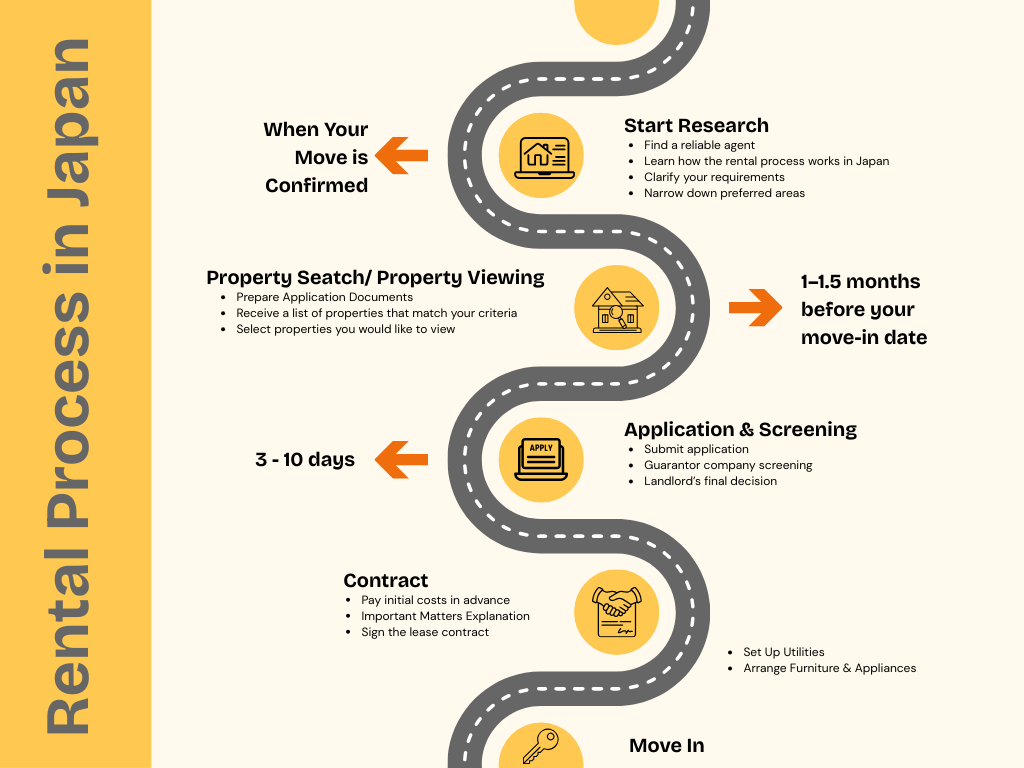
In this article, I’ll walk you through how to search for and rent a typical private apartment in Japan, focusing on the points that often confuse or concern foreigners.

How to rent an apartment in Japan

When Should You Start Looking for an Apartment?

There is no disadvantage to starting your research early.
Since you may not yet be familiar with different neighborhoods, I recommend:

  • Researching Japanese rental customs
  • Narrowing down preferred areas
  • Understanding what kind of properties are available within your budget

That said, if your move-in date is still several months away, keep in mind that Japanese rentals generally cannot be reserved far in advance.
Unlike some countries, there is usually no “hold” or “pre-booking” system.

As a general rule:

  • Property viewings typically begin 1 to 1.5 months before your intended move-in date
  • The contract start date is usually within one month after application

Peak Season: January to March

From January to March, demand is extremely high due to school graduations and job transfers.
During this period, I often advise clients to prepare thoroughly and be ready to make decisions quickly, as good properties are taken very fast.

Prepare the Necessary Documents

About two months before your move, you are now entering the stage of actively searching for properties. However, before you begin, it’s important to prepare the required documents for application.

The rental market in Tokyo Greater Area moves quickly. You may spend time researching, visiting properties, and finally find a place you really like—but if you cannot submit an application immediately, that opportunity may be taken by other candidates.

Rental applications require specific information and documents, so it is best to prepare them in advance. For foreign applicants in particular, the required documents may vary depending on individual circumstances, so I recommend consulting with your agent early in the process.

For more details on the required documents, please see this article.

In fact, real estate agents often ask at the inquiry stage whether you already have the necessary documents, especially when dealing with foreign applicants.

Being prepared can make a significant difference.

How to Search for Rental Properties

(1) Using Online Platforms

Many people begin their search using online platforms, including some that offer listings in English.

These platforms allow you to filter properties by:

  • Area
  • Budget
  • Floor plan
  • Size
  • Distance from the nearest station
  • Building age
  • Surrounding environment

Because searches often return a large number of results, I recommend narrowing down your preferred areas first.
(I will explain how to choose the right neighborhood in a separate article.)

Understanding Japanese Floor Plan Terminology

In Japan, floor plans are typically labeled as:

  • 1R (One Room): A single room with no separation
  • 1K: One room plus a separate kitchen
  • 1DK / 1LDK: One room with a dining or living-dining area
  • 2LDK: Two bedrooms plus a living-dining-kitchen area

Beyond this, the number simply increases as bedrooms are added.

When choosing a layout, think about:

  • How many bedrooms you actually need
  • Whether you prefer one larger open space
  • Or clearly separated rooms, which may feel smaller but offer privacy

Once you find a property that interests you, you can submit an inquiry directly through the platform.


Limitations of English-Language Platforms

It is important to note that English-language rental websites often show only a limited portion of the market.

Most Japanese residents use platforms such as SUUMO or At Home, which list the vast majority of available rentals—but these sites are almost entirely in Japanese.

For this reason, I believe the most efficient approach for foreigners is to work with a real estate agent experienced in international transactions, who can propose suitable properties from the full market.


(2) Visiting Local Real Estate Offices

Another option is to visit real estate offices directly in your desired neighborhood.

Local agencies usually know their area very well and can introduce many properties within that district.

If the agency specializes in rentals, they may accept walk-in clients if staff are available.
However, to ensure a smooth experience, I recommend contacting them in advance and sharing your basic requirements.

That said, most local agencies are not used to communicating in English, so this approach can be challenging unless you are comfortable in Japanese.


Property Viewings

When you inquire about a property, I recommend you to ask the real estate agent to propose several other options that match your criteria, not just the property you initially contacted them about.

Review the list carefully, and then schedule viewings for the properties you are interested in seeing in person.

Some agencies that specialize in foreign clients offer online viewings, but many traditional agencies are still not accustomed to this.
Additionally, many agents prefer in-person viewings to avoid misunderstandings later.

In Japan, a real estate agent always accompanies you during a viewing.
You usually meet at the property or at the agency’s office, and the agent unlocks the unit and shows you around.

Viewings are:

  • Completely free
  • Non-binding

In theory, there is no strict limit on the number of properties you can view. However, since viewings take time for both you and the agent—and an agent cannot accompany clients indefinitely—it is common practice to view up to three or four properties within the same area before making a decision.

Because rentals move quickly, I strongly recommend deciding on the same day or by the next day, and clearly communicating your intention to apply.


Application

Once you decide to proceed, you submit an application form to your real estate agency or agent. At this stage, the agency will first check with the landlord to confirm whether they are willing to accept the application.

At this point, the landlord does not review detailed documents yet. Instead, the agent typically shares basic information—such as your occupation, age, and general background—and if the landlord is comfortable, the application is provisionally approved to move forward to guarantor screening.

For this reason, documents required by the guarantor company are usually requested at the time of application. With the exception of a few guarantor companies, a Japanese address and phone number are often required at this stage. (I’ll cover this in more detail in a separate article.)

Applicant Information

  • Name
  • Address (must match ID documents)
  • Date of birth
  • Contact details
  • Employment information/School information
  • Annual income (approximate is acceptable)
  • Length of employment

Guarantor (if required)

In Japan, rental contracts traditionally required tenants to appoint a joint guarantor—a person who would be jointly and severally responsible for paying the rent if the tenant was unable to do so. In the past, it was common to ask a close family member to serve in this role.

However, in recent years, rent guarantor companies have become widely used as an alternative to individual guarantors. From a landlord’s perspective, guarantor companies offer greater security and reliability, which is why they are now the standard option in most rental contracts.

That said, not all properties require or accept a guarantor company even today, and some landlords may still prefer a traditional joint guarantor depending on the property and circumstances.

Emergency Contact

An emergency contact is still required in most cases.
Ideally, this is a family member in Japan, but for foreign tenants, this is often not possible.

In practice, I usually recommend:

  • A supervisor or manager at your workplace in Japan
  • An advisor from your school or university

Some landlords accept friends who live in Japan, so it is best to consult with your agent.

At this stage, in addition to the application form, you will also be asked to submit the other required documents mentioned earlier in this article.


Application Deposit (Holding Deposit)

You may be asked to pay an application or holding deposit.

This deposit:

  • Temporarily reserves the property
  • Is refundable if the contract does not proceed
  • May be applied toward initial costs if the contract is finalized

The typical amount ranges from ¥10,000 to one month’s rent.
If requested, I strongly advise confirming the refund conditions in advance.


Can I Negotiate the Rent?

Technically, rent negotiation is possible in Japan, but it is generally not recommended.

When an applicant asks for a rent reduction from the very beginning, landlords may perceive them as a potentially troublesome tenant, and in many cases, the application may be rejected for that reason alone.

That said, it is acceptable to ask with a “no harm in trying” mindset, understanding that if the landlord declines, that is the end of the discussion.

In cases where a property has been vacant for some time and the landlord is struggling to find a tenant, there is, of course, a higher chance that they may agree to a rent reduction.

As with many aspects of renting in Japan, this is something you should consult with your agent about, as timing and approach are key.


Screening Process

After submission, the application is sent to a guarantor company for screening.

How Long Does Guarantor Company Screening Take for Foreign Applicants?

For foreign applicants, screening by a guarantor company typically takes 2 to 5 business days once all required documents have been submitted.

In some cases, the process may be completed within 1–2 business days, but it can also take up to a week or longer if additional verification is required—such as confirming overseas documents, employment details, or income information.

During the screening period, the property is usually held for the applicant. However, if the process takes too long and there is another interested applicant waiting, the landlord may decide to proceed with the next application instead.

For this reason, make sure you have all documents ready in advance, respond promptly to any follow-up requests, and work closely with an agent who understands the process. Being well-prepared can help prevent unnecessary delays and reduce the risk of losing the property.

Hurray! Your application has passed the guarantor company’s screening

— but it’s not the final step yet.

Even if the guarantor company approves, the final decision always rests with the landlord.

Because tenant rights are strongly protected in Japan and it is extremely difficult to request a tenant to move out once problems arise, landlords are very cautious when deciding whether to accept a tenant.

Unfortunately, some landlords still refuse tenants simply because they are foreigners. However, this is usually confirmed before viewings take place, so rejection solely based on nationality at this stage is rare.

That said, landlords only learn detailed information—such as employment and income—at the application stage, and they make their final decision based on a comprehensive review.

Small Tip!

Landlords almost always ask the agent what the applicant was like.
Since agents value their relationship with landlords, they may advise against proceeding if an applicant seems problematic.

For this reason, it is important to behave appropriately and professionally not only with the landlord but also with the real estate agent.
They also often ask the agent what kind of impression the applicant made.

For this reason, maintaining a respectful and professional attitude throughout the process is very important.

In most cases, unless there are special circumstances, landlords will respond on the same day or the next day the guarantor company’s screening is approved.


Contract

Once approved, a contract date is scheduled.
Before the contract, you will receive a statement of initial costs, which must be paid by the deadline. Bank transfer is the most common payment method for initial costs, but in recent years, some agencies also accept credit card payments, so it is worth checking in advance. (I will explain the initial costs in detail in a separate article.)

What Happens on the Contract Day in Japan

In Japan, the rental contract is usually completed at the real estate agency’s office.
The landlord does not attend the contract signing in person.

On the contract day, you will first receive a legally required explanation called the Important Matters Explanation (Jūyō Jikō Setsumei).
This explanation is mandated by law and must be given by a licensed real estate agent.

During this explanation, the agent will go through key points such as:

  • Details of the property
  • Rent, management fees, and contract term
  • Rules and restrictions (including prohibited uses)
  • Conditions for renewal and termination
  • Responsibilities for repairs and maintenance
  • Rules regarding deposits and move-out procedures

This step is especially important for foreign residents, as many rental customs and legal concepts in Japan differ from those in other countries.

In particular, garbage disposal rules in Japan are very strict and can easily become a source of trouble with neighbors, so be sure to ask and fully understand the rules.

There are also many things that may be acceptable in your home country but are not allowed in Japan, such as leaving personal items in shared spaces. If you have any questions or uncertainties, do not hesitate to ask and make sure everything is clear.

After the Important Matters Explanation, you will proceed to sign the lease agreement and any related documents.
By this point, the initial costs should already have been paid, and no payment is typically made on the day of the contract.

Once the contract is completed, the agent will explain the next steps, including:

  • When and how to receive the keys
  • The official move-in date
  • Utility arrangements and move-in procedures

Taking the time to fully understand the contract on this day will help prevent misunderstandings and problems later on.


Moving In

You may move in from the contract start date.
Keys are usually collected from the agency on or just before that date.

In Japan, tenants are responsible for arranging their own utilities.
You should complete utility applications before your move-in date. This can usually be done online. Please note that gas activation requires an in-person appointment after move-in.


Furniture and Fixtures

In Japanese rentals, furniture, appliances, curtains, and lighting are generally not provided.

Downlights, bathroom lights, and kitchen lighting are usually installed, so you may be able to manage initially with those.
However, curtains are almost never provided and must be prepared by the tenant. To ensure a smooth start to your new life, you may want to prepare as much as possible before moving in.
Even before your move-in date, you may be allowed to enter the apartment to take measurements, or in some cases, the real estate agency may take measurements for you. If this is necessary, it is a good idea to consult with your agent in advance.

For more details on how to set up your home, please refer to this article.


Move-In Inspection

Upon moving in, you will usually receive a move-in inspection sheet.
To avoid being charged later for damage you did not cause, carefully check and record any scratches or damage that already exist at the time of move-in.


Starting Your Life in Japan

Renting an apartment in Japan requires preparation and understanding of local practices.
I support foreigners who are moving to Japan so they can find a best-fit home without unnecessary stress.
My services are designed not only for those already in Japan, but also for clients who are still overseas and planning their move.

My aim is to help you move directly into your new home from your very first day in Japan. I provide a range of tailor-made services, carefully adapted to each client’s situation and schedule.
My support goes beyond simply finding an apartment and includes assistance with move-in arrangements as well as ongoing support after you begin living in your new home.

From housing consultations to online viewings and contract procedures, full online support is available.
Please feel free to reach out if you have any questions or would like to discuss your housing needs.

I hope this guide helps you feel more confident as you begin your housing search in Japan.

“No Foreigners Allowed?” — Understanding Rental Challenges in Japan

Renting an apartment in Japan can be a frustrating experience for many foreigners.

If you’re an expat working for a major global company, your employer may introduce you to real estate agents, and with corporate backing, high-end or foreigner-friendly properties are often available.

However, if you are moving to Japan independently and searching for housing on your own, the experience can be very different. Many foreigners quickly discover that simply being a “foreigner” can become a major obstacle in the rental process.

Even in 2025, some landlords still refuse non-Japanese tenants outright. There have been reported cases where individuals with permanent residency—working for well-known Japanese companies—were denied housing solely because of their nationality.

While this practice has decreased in recent years, it is still not unheard of to encounter listings that effectively imply “No Foreigners Allowed,” which can be shocking for those unfamiliar with the Japanese housing market.

Legally speaking, rejecting tenants based purely on nationality is considered discrimination and has been ruled illegal in Japanese courts. However, even when it is not stated explicitly, nationality may still influence the tenant screening process behind the scenes.

So why does this situation still exist?
And more importantly—how can foreigners successfully find a place to live in Japan?


Why Do Some Landlords Refuse Foreign Tenants?

1. Strong Tenant Protection Laws in Japan

Japan’s legal system offers very strong protection for tenants. Once a lease begins, it is extremely difficult for landlords to terminate a contract, even when problems arise.

Because of this, landlords tend to be extremely cautious when selecting tenants. For individual owners in particular, the perceived risk is high. In many cases, landlords live in the same building or on the top floor, which makes them especially sensitive to potential issues.

From a landlord’s perspective, choosing the wrong tenant can become a long-term legal and emotional burden.


2. Communication Barriers

Many landlords—especially older ones—struggle with English, let alone other foreign languages. Unlike countries with long histories of immigration, Japan is still relatively new to renting homes to foreign residents.

Landlords often worry about misunderstandings after move-in, such as:

  • Difficulty explaining house rules
  • Challenges responding to emergencies
  • Miscommunication regarding repairs or payments

Even well-intentioned landlords may choose to avoid foreign tenants simply to reduce stress.


3. Cultural Differences in Daily Living

Japanese rental housing comes with detailed expectations regarding daily life, including:

  • Noise levels
  • Garbage separation and disposal schedules
  • Use of shared spaces
  • Lease renewal and cancellation rules

Some landlords fear that foreign tenants—despite their best intentions—may not fully understand these unwritten rules, leading to complaints from neighbors or management companies.


4. Previous Negative Experiences

In some cases, landlords have experienced real problems in the past, such as:

  • Tenants leaving Japan suddenly without notice
  • Unresolved disputes over rent or damages
  • Strong cooking odors lingering in the apartment
  • Units left in extremely poor condition after move-out

Unfortunately, a single negative experience can strongly influence a landlord’s future decisions.


5. Guarantor and Emergency Contact Concerns

Traditionally, Japanese landlords require a Japanese guarantor. While guarantor companies are now common and more foreigner-friendly, they do not eliminate all concerns.

Landlords often feel more secure when tenants have:

  • A reliable emergency contact in Japan
  • Ideally someone with stable status, such as a company representative or senior manager

Simply listing a friend is sometimes not considered sufficient reassurance.


6. Real Estate Agencies That Cannot Support Foreign Clients

Many small, local real estate agencies work closely with individual landlords and assist with property management. Some lack the language skills or experience to handle foreign clients smoothly.

As a result, these agencies may quietly encourage landlords to avoid renting to foreigners to minimize potential complications.

Foreigner Friendly Properties

Certain types of properties are generally much easier for foreigners to rent.
For example, buildings managed by large property management companies, investment-oriented rental properties, or newer condominiums in urban areas tend to accept foreign tenants with far less hesitation. In these cases, screening is usually more standardized, and decisions are based more on income stability and documentation than on nationality itself.

What Landlords and Screening Companies Actually Look At

Many foreigners assume nationality is the main factor.
In reality, landlords are primarily assessing risk.

Here’s what matters most.


Stability of Income

Landlords want reassurance that rent will be paid consistently.

Important factors:

  • Length of employment
  • Type of employer (well-known company vs. unknown startup)
  • Income level relative to rent (typically rent ≤ 30–35% of income)

Providing clear, well-organized income documentation makes a strong impression.


Visa Status and Length of Stay

Contrary to popular belief, permanent residency is not always required—but clarity is.

Landlords look for:

  • A valid visa with sufficient remaining duration
  • A reasonable expectation that the tenant will stay long-term

Short-term or uncertain visa situations increase perceived risk.


Guarantor or Emergency Contact

This is one of the most critical elements.

Even if a landlord is open to foreigners, they often insist on:

  • A reputable guarantor company
  • Or a strong corporate guarantee

The guarantee reduces anxiety about unpaid rent, sudden departure, or disputes. 

Even if an application is approved by a guarantor company, it does not cover every possible situation, which is why the choice of emergency contact is extremely important.

Ideally, the best emergency contact would be a family member residing in Japan, but in reality, this is often difficult.
In most cases, the most suitable emergency contacts are a supervisor or manager at your workplace in Japan, or a representative from your school or educational institution.

Friends, on the other hand, are often not accepted as emergency contacts, and in many cases, may not be considered sufficiently reliable by landlords or management companies.


Attitude and Communication

This point is underestimated but extremely important.

Landlords and agents notice:

  • Whether you respond promptly
  • Whether you ask reasonable questions
  • Whether you appear respectful of rules

A calm, cooperative attitude often makes a stronger impression than perfect paperwork.

Common Mistakes Foreigners Make (and How to Avoid Them)

Even well-qualified applicants can unintentionally hurt their chances. Here are some frequent pitfalls.

Mistake 1: Applying to Too Many “Impossible” Properties

Many foreigners unknowingly apply to properties that are extremely unlikely to accept non-Japanese tenants.

Repeated rejections can:

  • Waste time
  • Lower morale
  • Delay relocation plans

Working with someone who knows which properties are realistic makes a huge difference.

Mistake 2: Underestimating Cultural Expectations

Japan has many unwritten rules around daily living.

Common issues include:

  • Garbage sorting errors
  • Noise complaints
  • Misunderstanding renewal or cancellation terms

Showing that you understand—or are willing to learn—Japanese living norms builds trus

Mistake 3: Poor or Incomplete Documentation

Missing or unclear documents create doubt.

Examples:

  • Untranslated income proof
  • Unclear visa status
  • Inconsistent information across forms

Preparation and clarity are key.

Mistake 4: Treating the Process Like Other Countries

In some countries, renting is fast and informal.
In Japan, it is process-heavy and document-driven.

Trying to rush or push back against standard procedures can raise red flags.

Mistake 5: Assuming Rejection Is Personal

This is important emotionally.

Many rejections have nothing to do with you personally.
They reflect:

  • The landlord’s past experiences
  • Legal fears
  • Advice from managing agents

Understanding this helps keep the process objective and less stressful.

Final Thoughts

Although Tokyo is home to a large and growing foreign population, the reality is that renting an apartment as a foreigner can still be challenging.
Despite gradual improvements, many non-Japanese residents continue to face unnecessary stress and obstacles during the housing search process.

Working with a real estate agent who specializes in supporting foreign tenants can make a significant difference. Successful negotiation often depends on the skill and judgment of the agent representing you. An experienced agent can assess the situation, understand the landlord’s position, and negotiate on your behalf in a way that protects your interests without damaging the application.
With the right expertise and network, it is possible to avoid much of this frustration and find a suitable home smoothly, efficiently, and with confidence.

How to Operate Your Japan Property as an Airbnb / Short-Term Rental (Minpaku)

Many of my international clients tell me the same thing:

“I visit Japan frequently and want to purchase my own property—but since I won’t be here all the time, I’d like to rent it out on Airbnb when I’m away. Is that possible?”

In Japan, renting out a property through platforms like Airbnb is commonly referred to as Minpaku. While Minpaku is not a strict legal definition, it generally means renting all or part of a private residence to paying guests.

If you’re considering buying property in Japan and operating it as a short-term rental, this guide will help you navigate the legal systems, licensing options, zoning rules, and market opportunities.

Minpaku Market Trends

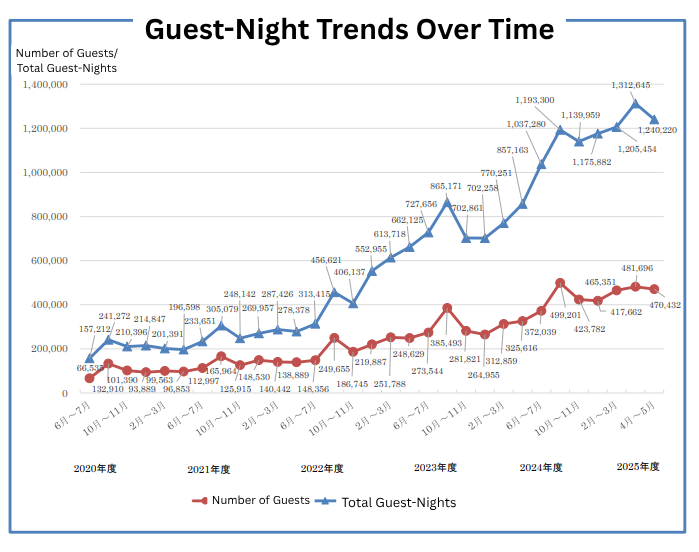
Japan’s Minpaku market has continued to grow steadily since the Private Lodging Business Act (Minpaku Shinpō) came into effect in June 2018. When the law was first introduced, there were only 2,210 registered properties nationwide. But as inbound tourism increased and local governments refined their regulatory frameworks, the number of registrations expanded year after year.


Guest-night statistics (Source: Japan Tourism Agency, 2025)

By 2025, with tourism rebounding strongly, the total number of Minpaku notifications reached a new record high. For foreign buyers considering short-term rental operations in Japan, this trend shows that the market remains active, regulated, and full of opportunity.

Start Here: Understanding Minpaku Basics

Before explaining how to start Minpaku, such as obtaining permits, choosing a property, or preparing your operations, it’s important to understand the fundamental legal frameworks that govern Minpaku in Japan. These rules determine what type of operation you can run, where you can run it, and what procedures are required.

Before you can decide how to operate Minpaku, it’s essential to understand that Japan recognizes several different legal categories of short-term rentals—each with its own rules, advantages, and limitations. Operating without permission is considered illegal Minpaku and may result in criminal penalties. 

Whether you already own a property or are planning to purchase one, the first step when considering Minpaku is to decide which operational framework best fits your goals.

Choosing the right one will determine how often you can rent out your property, what procedures you must follow, and even which locations are legally eligible.

Types of Minpaku You Can Operate in Japan

Here are the three legal categories:

1. Simplified Lodging (Hotel Business Act)

A full hotel/inn license for operating more than 180 nights per year. This framework is regulated like a small hotel, with strict facility and safety requirements. You should also be aware that hotel/inn businesses can only be operated in zones where such use is allowed under Japan’s zoning regulations.

2. Special Zone Minpaku

Allowed only in designated National Strategic Special Zones such as parts of Tokyo and Osaka. There is no limit on operating days, but availability is limited. In Tokyo, for example, the only ward authorized for Special Zone Minpaku is Ōta Ward. (Cabinet Office – National Strategic Special Zones:)

3. Private Lodging Business (Minpaku Shinpō)

The most easy option.
Allows operation for up to 180 days per year, even in residential zones.
If the host does not live on-site, hiring a licensed Minpaku management company is mandatory. I’ll go into more detail in the following section. (Japan Tourism Agency – Starting a Private Lodging Business)


CategoryPrivate Lodging Business (Minpaku Shinpō)Special Zone MinpakuSimplified Lodging (Hotel Business Act)
Operating DaysUp to 180 days/yearNo limitNo limit
Where You Can OperateResidential zones allowedOnly in designated strategic zonesCommercial-use zones only
Permit / NotificationNotification filing requiredSpecial Zone approval requiredFull hotel/inn license required
Renovation RequirementsMinimal (basic home facilities only)ModerateOften extensive renovations required
Management RequirementLicensed management company required if host-absentLicensed operator requiredSelf-management or licensed operator
Difficulty LevelEasyMediumHigh
Best Suited ForOwners renting part-timeProperties in designated zonesFull-scale hospitality business

Private Lodging Business (Minpaku Shinpō)

The Easiest Way to Start Minpaku in Japan

Since the Private Lodging Business Act (Minpaku Shinpō) is the easiest framework to begin with, and the most suitable for owners who don’t plan to operate a full-scale Minpaku business, this article will focus on this option.

Advantages:

1. Easier and Faster to Start

Unlike hotel licenses, this system requires only a notification filing, not a full inspection-based approval. As long as you submit the required documents and meet the criteria, the filing is accepted.

2. No Major Renovation Needed

If your property already includes the essential four facilities (kitchen, toilet, bathroom, and wash basin), no major construction is legally required under the Private Lodging Business Act. In contrast, the Hotel Business Act often requires substantial renovations; for example, installing additional fire safety equipment, widening hallways, upgrading ventilation systems, or meeting stricter structural standards similar to a small hotel.

3. No Change of Building Use Required

Under Japanese law, hotels and inns require a different building classification than regular homes. Normally, converting a house into a lodging facility requires a formal “change of use,” which involves inspections and renovation work.
With Minpaku Shinpō, you can operate short-term rentals without changing the building’s official classification, saving both time and cost.

Disadvantages:

1. 180-Day Operating Limit

You may operate only up to 180 days per year.
Many municipalities impose their own additional restrictions, such as allowing Minpaku operations only on weekends, so the actual rules can vary greatly depending on the area. Because these rules differ widely by municipality, checking local regulations is essential.

If you wish to exceed 180 days, one option is to switch to monthly rentals, which fall under long-term leasing regulations. For example, operating as Minpaku during peak travel seasons and switching to long-term or monthly rentals during quieter periods. This hybrid approach allows you to maximize occupancy while staying fully compliant with the law, while also giving you the flexibility to reserve the property for your own stays.

2.“Residential Dwelling” Requirement

The Minpaku Shinpō allows only residential dwellings to be used for short-term rentals. Although this may sound simple, the legal definition is much stricter than many people expect. To qualify as a residential dwelling, the property must be actually used—or clearly intended to be used—for living purposes.

Because of this, some properties cannot be used for Minpaku right away. For example:

  • Newly built homes that have never been occupied, and
  • Long-vacant properties

may not meet the legal requirement unless you can prove actual residential use, active tenant recruitment, or periodic occupancy by the owner.

This can be an unexpected obstacle for buyers. So it’s essential to verify the property’s eligibility before proceeding with any Minpaku plans.

3. Mandatory Management Company (If Host-Absent)

There are two operational styles under the Private Lodging Business Act: host-staying and host-absent. The requirements differ significantly between the two.

If your goal is to rent out the property while you are not staying there, your operation will naturally fall into the host-absent category.

The host-staying model requires the owner to live on-site during guest stays and handle responsibilities such as guest interaction, ID verification, and daily oversight. Because of these obligations and time commitments, it can be difficult for individuals who also work full-time or live abroad to manage this model effectively.

For this reason, the host-absent model is generally the more realistic and practical choice for foreign property owners.

Host-absent Minpaku must be managed by a licensed Minpaku management company registered with the Japanese authorities. These companies handle all legally required operations allowing you to run your Minpaku smoothly even if you live overseas.

List of registered Minpaku management companies

4. Waste Disposal Rules

This may seem like a small detail, but waste disposal rules can be unexpectedly strict and vary significantly by municipality. Some municipalities do not collect business-related waste from Minpaku operations. In these areas, you cannot simply use the normal household garbage system. Instead, you must contract a private waste disposal company to handle trash generated by guests. This may include arranging regular pick-ups, paying additional service fees, and following local rules on separation and disposal. If you are working with a Minpaku management company, they will typically take care of this entire process, so you don’t need to worry about it yourself.

Application Process

To operate under the Private Lodging Business Act, you must submit a formal notification to the prefectural government. Although the process is simpler than obtaining a hotel license, it is still fairly detailed and can be challenging for first-time applicants, especially if you are overseas or do not read Japanese.

Your submission must include:

  • Applicant information (name, address, contact details)
  • Property details, including exact location and legal classification
  • Floor plans showing all required facilities
  • Corporate director names (if you are applying as a company)
  • Guardian information (if the applicant is a minor)
  • Proof of eligibility, such as certificates confirming you are not bankrupt or legally disqualified

The documents must be prepared in Japanese and follow each municipality’s specific format and instructions. Some prefectures require additional supplementary documents or clarifications, and even small mistakes can delay acceptance of your notification.

Because of these complexities, many applicants choose to hire a licensed administrative scrivener (Gyoseishoshi) to handle the application.

The cost of hiring an administrative scrivener (Gyoseishoshi) to handle the Minpaku application varies depending on the region and the specifics of your property. Generally speaking, the typical range is around ¥50,000 to ¥120,000.
If you need an administrative scrivener who can provide full English support, the fee is often slightly higher, but for many foreign owners, the added clarity and smoother communication are well worth the investment.

Detailed instructions: https://www.mlit.go.jp/kankocho/minpaku/

Choosing the Right Property for Minpaku

If you don’t yet own a property, your biggest question is likely how to choose a home that can actually be rented out as Minpaku. This decision is crucial, selecting the right property from the start will determine whether your Minpaku operation is successful, compliant, and sustainable in the long run.

Now that you understand the key legal frameworks surrounding Minpaku in Japan, and have clarified the strategy you want to pursue, let’s move on to the next critical step: identifying the locations that best align with your goals.

Where Minpaku Properties Are Concentrated

Minpaku registrations in Japan are not spread evenly across the country. They are heavily concentrated in major tourism and transportation hubs. The prefectures with the highest number of registered Minpaku homes include Tokyo, Osaka, Hokkaido, Chiba, and Fukuoka, all of which benefit from strong visitor demand and well-developed travel infrastructure.

Recent data from the Japan Tourism Agency shows this concentration clearly. Nationwide, total guest-nights reached 1,240,220, representing 119.6% growth compared to the same period the previous year.

Among all prefectures, Tokyo ranks first with 595,494 guest-nights, followed by Hokkaido (188,031) and Osaka (49,119). This shows how strongly Minpaku demand aligns with tourism intensity. Although Kyoto is one of Japan’s major tourism destinations, the number of registered Minpaku properties is surprisingly low. This is largely due to the exceptionally strict local regulations that make it difficult to operate Minpaku legally within the city. 

Within Tokyo itself, Minpaku activity is further concentrated in a handful of highly visited wards, including Shinjuku, Taito, Sumida, Shibuya, and Toshima, where major railway stations, popular sightseeing areas, and relatively flexible municipal rules make operations smoother.

(The latest data published by the Japan Tourism Agency in 2025)

Why These Areas Show the Fastest Minpaku Growth

These regions dominate Minpaku performance for five key reasons:

1. High inbound tourism demand

Tokyo, Hokkaido, and Fukuoka are among Japan’s most frequently visited destinations.
Chiba benefits from Narita Airport and Tokyo Disneyland, attracting international travelers year-round.

2. Hotel shortages during peak seasons

In these popular cities, hotels often reach full occupancy during weekends, holidays, and large events. Minpaku fills this supply gap.

3. Exceptional transportation connectivity

  • Tokyo wards contain major hubs such as Shinjuku, Shibuya, and Ueno.
  • Chiba provides direct, fast access to Narita Airport.
  • Fukuoka’s airport is uniquely located minutes from the city center.
    This convenience makes these areas ideal for short-term visitors.

4. Favorable or flexible local regulations

Some municipalities, such as Taito and Sumida, avoid strict weekday limits, making day-to-day operations easier. However, even in these areas, complaints and neighborhood concerns have been increasing, and some districts are now considering tightening their rules. Investors should stay aware of potential regulatory changes going forward.

5. Lower acquisition costs in regional cities

Real estate in regional areas such as Chiba, Hokkaido, and Fukuoka is generally more affordable than in Tokyo. This allows investors to achieve stronger ROI while still benefiting from steady visitor traffic and robust tourism demand in these regions.

Location and Zoning Considerations

The Private Lodging Business Act (Minpaku Shinpō) was originally created to make it possible for residential properties to be used legally for short-term lodging.
For this reason, Minpaku under this framework is generally permitted anywhere residential buildings can be built from a zoning perspective. Please not that this is separate from the question of whether the property meets the legal definition of a “residence.” As far as land-use zoning is concerned, traditional hotel zoning restrictions do not apply.

Additionally, zoning alone is not enough. Additional layers such as Special Use Districts (特別用途地区) and municipality-specific rules can significantly affect what is allowed. Some cities impose:

  • limits on operating days
  • restrictions near schools
  • additional notification requirements

Because of these factors, it is essential to check both zoning and local municipal rules before purchasing a property.

Condominium Rules

Most condominium buildings in Japan explicitly prohibit Minpaku in their management bylaws. Although the data is from 2018, a nationwide survey at that time showed that 80.5% of condominium associations in Japan explicitly prohibited Minpaku. Since this was shortly after Minpaku laws were first introduced, and many buildings had not yet updated their internal rules, it is reasonable to assume that the percentage of condominiums banning Minpaku has increased in recent years.

Given this reality, the most practical property types for foreign investors are:

  • A standalone house, or
  • An entire small apartment building

Standalone homes offer flexibility but require careful attention to local neighborhood sentiment.
Entire buildings provide operational control and are often ideal for investors who want to combine long-term tenants with Minpaku usage.

Choose a Reliable Operator

Choosing the right Minpaku management company is just as important as choosing the right property, and it has a major impact on how smoothly your operation will run. Because Minpaku, especially host-absent operations, requires meticulous legal compliance, selecting a company with a strong reputation and municipal experience is essential.

Your management company should be able to handle:

  • Cleaning and linen replacement
  • Waste disposal (including arranging private collection when required)
  • 24/7 emergency support
  • Guest check-in and ID verification
  • Multilingual guest communication
  • Compliance with local regulations

And as for the fees, which owners are often concerned about, most companies charge 20–30% of your gross rental income.
However, picking a reliable operator involves much more than comparing fees.
A good operator not only keeps your property running smoothly but also minimizes neighborhood friction and legal risk.

Finding the Strategy That Fits Your Goals

As discussed, operating Minpaku is rarely feasible if you own only a single condominium unit. For this reason, standalone houses or entire buildings remain the most practical options for flexible Minpaku use.

If you already own a property, or if you do not necessarily want to purchase in a prime tourist district, you may wonder whether such locations can still work for Minpaku. While houses in residential areas are not always close to major sightseeing spots or major stations, Minpaku demand does not come only from international tourists. Many domestic travelers use Minpaku for short visits for various purposes, and many foreign visitors, including digital nomads, prefer quieter residential neighborhoods where they can stay for longer periods and experience everyday life like locals.

For those purchasing a vacation home in a regional area, it is also reasonable to assume that others may wish to enjoy the same environment you value.

Ultimately, the right approach depends on how much income you expect. If maximizing revenue is your priority—and you wish to operate more than 180 days a year—obtaining a Hotel Business Act license in a high-demand location may be worth considering. But if the property is primarily for your own use and you simply want to generate some income while you are away, occasional Minpaku or monthly rentals can be both realistic and practical. In fact, in popular tourist areas where competition is high, properties slightly outside the core may even benefit from having fewer competing listings.

Support for English-Speaking Owners

Japan’s Minpaku system offers meaningful opportunities for foreign investors, but only if you navigate the legal requirements and understand local regulations. With the right planning, you can enjoy your property whenever you visit Japan while generating income during your absence.

However, operating Minpaku from overseas presents challenges that many owners do not anticipate. While most management companies can communicate with guests in English (as they should), very few provide clear, reliable English support to property owners themselves. As a result, many foreign owners feel uncertain or disconnected from the daily operations of their own property.

To bridge this gap, I work closely with clients by:

  • helping them evaluate and choose a trustworthy management company,
  • assisting with communication between owners and operators, and
  • making sure they stay informed throughout the entire Minpaku operation.

And my support goes beyond simply showing properties.
I assist with property selection, developing your Minpaku strategy, and ensuring that you work with the right partners, because successful Minpaku management requires not just a good property, but also a reliable team and ongoing communication.

If you need help evaluating your approach, identifying Minpaku-friendly properties, or navigating communication with management companies or judicial scriveners, please feel free to contact me. I’m here to support you from the very first property search all the way through full Minpaku operation.

Disclaimer: Regulations may change. Please verify the latest requirements with a qualified professional.

Setting Up a Home in Japan: What You Should Know Before You Move

In Japan, whether you rent or buy a property, it usually comes completely unfurnished — not only without furniture, but often without basic appliances such as a refrigerator, washing machine, or even lighting fixtures.
This can be a big surprise for many newcomers. Once you decide to move to Japan, one of the biggest questions becomes:
“How do I actually start my life once I get there?”

Most people start by renting first. However, even renting can take time — once you arrive in Japan, you’ll need to search for a property, apply, sign a contract, and set up your daily essentials, which, often takes at least two to three weeks or more optimistically before your new home is truly ready.

During this transition period, you’ll likely need to stay somewhere temporarily such as a hotel, or a furnished serviced apartment. While these are convenient, they can be expensive and may not feel like home. You might start thinking, “If I’m going to spend that much, I’d rather put it toward furniture for my own place.”

On top of that, moving involves numerous tasks, adjusting to a new country, handling government paperwork, starting a new job, and house-hunting all at once. It’s easy to feel overwhelmed.

How to Buy Furniture in Japan: A Complete Guide for New Expats

To help reduce stress, I offer services that allow you to search for a home while still abroad, and even have it move-in ready before your arrival — including setup, furniture purchasing, and utility arrangements. However, in this article, I’ll focus on how and where to buy furniture yourself in Japan.

Just like in other countries, most furniture and appliances can be purchased online, but because these are large items, many people prefer to see them in person before deciding.
Even when ordering online, keep in mind that delivery may take several weeks depending on stock and location.

Start with the Basics — What You Really Need

As mentioned above, most homes in Japan are unfurnished, so you’ll likely need at least:


• A bed or futon
• Basic appliances such as a refrigerator, microwave, and lightings
• Furniture
• Curtains (yes, even these are often not included!)

Measure your rooms carefully. Japanese homes are typically compact, and furniture sizes differ from Western standards.

🎌 Yay! Your first encounter with Japanese culture — futons!
A futon is Japan’s traditional bedding, laid directly on the floor and folded away during the day to save space. It’s practical for small apartments, and airing it outside keeps it fresh in Japan’s humid climate. While fewer people use futons today, they remain a charming way to experience traditional Japanese living.

Washing machines range widely in price, from around ¥50,000 for compact models to over ¥300,000 for advanced ones. However, Tokyo now has modern, stylish coin laundries that are clean, efficient, and convenient, which are great options for singles and couples who only need to wash once or twice a week.

Where to Buy Furniture in Japan

There are a bunch of stores, so here are just a few examples to get you started. Pick what fits your budget and lifestyle.

Affordable & Easy

Nitori – Japan’s equivalent of IKEA, with furniture sized for Japanese homes. Affordable, functional, with online ordering and delivery services.
IKEA Japan – Great when you can’t find stylish yet affordable designs elsewhere. Just note that some pieces are large for Japanese apartments, and most stores are in the suburbs.
Shimachu Homes – Local chain offering furniture and home goods with setup services.

Mid-Range to Stylish

  • IDC Otsuka / Francfranc / Actus / Karimoku – Trendy, urban styles perfect for city apartments.

IDC Otsuka offers large showrooms where you can take your time exploring a wide range of furniture.

  • Muji (無印良品) – Minimalist, practical, and beautifully designed Japanese furniture.

Second-Hand & Sustainable

Hard Off / Off House – Reliable used furniture and appliances in great condition.
Facebook Marketplace / Sayonara Sales – Expats leaving Japan often sell items cheaply or even give them away — great deals if timing is right.

Independent & Designer Stores

Tokyo is full of characterful furniture stores — from world-famous brands like Cassina and Herman Miller to boutique shops and antiques.
For furniture lovers, visiting Tokyo’s Meguro-dōri (“Furniture Street”), which has over 30 interior shops, is a real treat.

Beds & Mattresses in Japan

Japan doesn’t have as many mattress-only superstores as other countries, but you can try high-quality options like:


• Showrooms of international brands: Sealy, Ligne Roset, Tempur
• Department-style retailers: IDC Otsuka
• Specialty bedding stores: France Bed and Nishikawa

Japanese mattresses tend to be thinner and smaller, not necessarily less comfortable, just different.
If you choose a Japanese brand, make sure the size matches your body and sleeping preference. Always check dimensions before purchasing.

Other Essentials

Even if some rooms have blinds, curtains are rarely included. You can get ready-made curtains from Nitori, Aeon, or Muji, or order custom ones for a better fit.
As for kitchenware and small essentials, Nitori, Muji, and Aeon offer convenient one-stop shopping.
If you love tableware, exploring Japanese ceramics and local pottery can be a fun way to personalize your dining table.

Appliances — Where to Buy

Large retailers like Bic Camera and Yamada Denki carry almost everything, with knowledgeable staff and solid after-sales support.
In major city stores, you’ll often find staff who speak English, Chinese, or other languages. 

When buying in-store, check prices online first and don’t hesitate to negotiate. You can often get a discount if you show a cheaper listing elsewhere.

You can also order online via Amazon Japan, Rakuten, or price comparison sites like Kakaku.com. If buying from non-major retailers, confirm warranty and support details first.

Don’t forget to buy lighting fixtures, as many homes have ceiling sockets but no main light included.

Delivery & Assembly — What to Expect

Most stores offer delivery and assembly for a small fee. Apartments without elevators or with narrow stairs may incur extra costs.
Even professional movers can make small mistakes, so it’s best to be present during delivery — not only to open the door, but also to ensure no damage occurs.
This is especially important for rentals, since any scratches or dents may affect your security deposit.

Need a Hand?

Shopping in an unfamiliar country can be challenging.
I offer store-accompaniment and proxy purchasing services, so you can communicate easily with staff and enjoy stress-free, efficient shopping.
Clients often tell me it made the experience both fun and smooth.

Utilities & Appliances

Your home won’t function until electricity, gas, and water are connected.
Most can be arranged online in advance — you don’t need to be home for electricity or water, but gas setup requires you to be present for a safety check.

Japan’s energy market is now liberalized, so you can choose from many providers.
If you’re unsure, in Tokyo you can’t go wrong with Tokyo Electric Power (TEPCO) or Tokyo Gas — the difference between companies lies mostly in pricing and service.

Also note: Japan uses 100V two-prong Type A outlets, the same plug shape as in the U.S. but with slightly lower voltage, so check appliance compatibility.

Internet Options in Tokyo Apartments

You have several options — from pre-installed internet to plug-and-play routers:

There are multiple ways to get connected, from pre-installed building internet to carrier Wi-Fi routers. Watch contract terms and cancellation fees.

1) Pre-Installed Internet

Many modern apartments include building-contract internet. Plug in your router or use the provided login.

  • Pros: Ready on move-in / no installation / often included or low fee
  • Cons: You can’t choose the provider freely (though you can sign a separate plan), and speeds may slow during peak hours.

Common examples: NTT FLET’S Hikari (bulk), J:COM NET (cable)

2) Fiber-Optic Internet (Hikari Kaisen)

Fastest and most stable; ideal for long-term residents and remote work. (1–2 Gbps)

Recommended providers:

  • NTT Hikari (FLET’S Hikari) – Backbone fiber service used by many ISPs
  • Asahi Net – Reliable, English support, flexible plans
  • Docomo Hikari – Great if you already use Docomo mobile
  • SoftBank Hikari – Bundled discounts for SoftBank users
  • Sakura Fiber Internet – Popular with expats; full English service

💡 Installation typically takes 2–4 weeks.

3) Cable-TV-Based Internet

J:COM / ITSCOM use cable TV infrastructure; bundle with TV/phone. Speeds ~320 Mbps to 1 Gbps and often quick to start since wiring already exists.

4) Home Wi-Fi Routers (No Installation)

Plug-and-play 4G/5G routers such as SoftBank Air, Rakuten Turbo 5G, and AU Home Wi-Fi 5G Box.
Great for renters who can’t install fiber or need a temporary solution before a permanent setup.

How My Home Setup Support Service Works

Feeling overwhelmed with too many things to do? No worries. Consider using my Home Setting Service. Before your lease starts, I can help measure your rooms, suggest stores and products that match your taste and budget, and arrange purchase, delivery, and installation — so your home is ready when you arrive. I can also help you handle the necessary paperwork once you arrive in Japan.

✈If You’d Like to Move In as Soon as You Arrive in Japan

I can assist you in completing the entire process, from property viewing to signing the contract, fully online before you come to Japan.

Once the contract is finalized, I will visit your new home on your behalf to take measurements and, if needed, suggest suitable furniture and appliances.
After you’ve made your selections, I can also take care of purchasing and receiving your furniture, and be present for the delivery and setup, so your home is ready before you arrive.

(Please note: delivery times vary depending on the product and timing, so not all items may arrive before your arrival. If essential furniture such as a bed cannot be delivered in time, I can arrange temporary furniture rental and attend the delivery on your behalf.)

I also handle utility setup, arranging for water, electricity, and gas to be connected. Sincegas activation requires an in-person appointment, I can attend on your behalf as well.

🗾If You’re in Japan and Ready to Set Up Your New Life

If you’re already in Japan, I can assist with:

  • Attending large furniture deliveries with you, or on your behalf
  • Accompanying you on shopping trips for furniture, appliances
  • Assisting with custom-made items, such as curtains or other furnishings
  • Providing support with product selection and communication with store staff…etc.

🛍Making the Most of Your Shopping Experience

To make your shopping experience truly satisfying, the key is to first visit stores that match your taste and budget, and then build good communication with the staff.
In a country where English is not the first language, this can sometimes be challenging.
From recommending the right stores and handling communication or negotiation with staff, to ensuring you find items that genuinely fit your lifestyle, taste and budget, I’ll support you in making confident and enjoyable purchases.

My services are generally charged by the hour. I provide customized estimates depending on your specific needs.
You can request only the services you require, and I’m happy to tailor my support to your needs.
Please note that availability may vary depending on my schedule.

Let’s Make Your Move to Japan Comfortable and Fun

Each topic here, furniture, beds, appliances, internet, utilities, could be a full article on its own.
Setting up a home in Japan can be both exciting and overwhelming, but with good preparation and local support, your transition can be smooth and enjoyable.

My goal is to make your relocation and home setup in Japan as smooth and stress-free as possible.
Even if you only need help with part of the process, please feel free to reach out — I’d be delighted to assist.
Let’s make your move to Japan comfortable, efficient, and stress-free, so you can truly feel at home from day one.

A Complete, Updated Guide with Trends, Costs, and Buying Steps for Foreigners Buying Properties in Japan

1. Japan’s Real Estate Market Continues to Attract Global Investors

Japan has long been one of the most attractive real estate markets in Asia, known for its economic stability, clear legal system, and world-class infrastructure.
In recent years, its appeal has grown even further — driven by steady economic recovery, the perception that Japanese property remains relatively affordable compared with other major global cities, and the weakened yen, which makes assets in Japan even more enticing for foreign investors.

According to CBRE’s Japan Investment Market Report (2024), foreign investors accounted for roughly 30% of all property transactions in Japan, up from about 24% before the pandemic.
A March 2025 survey by Mitsubishi UFJ Trust and Banking Corporation found that in Tokyo’s 23 wards, between 20% and 40% of newly built condominium units were purchased by foreign buyers — including individuals, institutional funds, and high-net-worth investors (HNWIs).

This international interest reflects Japan’s strong fundamentals: stable prices, low interest rates, high-quality infrastructure, and a safe, comfortable living environment.

2. Rising Concerns and Potential Regulations Ahead

Japan’s growing foreign demand has sparked debate that it may be contributing to rising real estate prices, particularly in central Tokyo and Kyoto.

Countries such as Singapore, South Korea, Canada, China, and more recently Australia have all introduced strict regulations limiting or prohibiting property purchases by foreign nationals.
In contrast, Japan currently allows foreigners to freely buy real estate, whether for residential or investment purposes, without any visa or residency requirement.
This open policy is one reason Japan continues to attract overseas investors seeking both stable returns and lifestyle benefits.

However, as international scrutiny grows and housing affordability becomes a public concern, Japan may eventually follow the trend of tightening rules.
Indeed, the October 2025 revision of the Business Manager Visa requirements signals a more cautious stance toward inbound investment overall.

For now, foreigners can still purchase and own property in Japan with few restrictions, but staying informed about future policy shifts is increasingly important.

3. Step-by-Step Guide: How to Buy Real Estate in Japan as a Foreigner

The buying process depends on whether you are purchasing a new development (sold in lots) or a pre-owned property (through a brokerage).

3.1 How to Find a Property in Japan

Foreign buyers in Japan typically follow a similar process, whether purchasing a newly built condominium (from a developer) or a pre-owned property (through a brokerage).
While transaction channels differ slightly, the overall flow remains largely the same.

Step 1: Find a Property and Choose an Agent

Properties in Japan can be found through:

  • Online listing sites such as SUUMO, Realestate Japan, or At Home
  • Newspaper or magazine advertisements
  • Licensed local real estate agents

Japan operates a mandatory listing system called REINS, a database that all licensed real estate agents can access.
This ensures transparency—every agent sees the same listings.
However, negotiation skills, communication quality, and responsiveness differ greatly between agents, so selecting a proactive one can make a big difference.

Step 2: View the Property and Plan Your Finances

Once you’ve identified promising properties, schedule viewings.
Agents can arrange both in-person and virtual tours.
During this stage, you’ll also plan your financing—especially important if you intend to apply for a mortgage (though, as explained later, foreign buyers without residence in Japan often need to purchase in cash).

Step 3: Make an Offer

If you wish to buy, you’ll submit a written purchase offer.
For new developments, this is usually done directly with the developer; for resale properties, it’s submitted through your broker.

Step 4: Legal Explanation and Contract

Before signing, the agent or developer must provide a legally required document called the Explanation of Important Matters (Jūyō jikō setsumeisho).
This outlines ownership rights, property conditions, taxes, and any potential risks.

After reviewing and accepting the terms, you’ll sign a sales contract and pay a deposit (Tetsuke-kin), usually 10–20% of the purchase price.

Step 5: Mortgage Screening (if applicable)

Buyers seeking financing must undergo bank and guarantor company screening.
This process can take from a few days to several weeks, depending on your visa status and income source.

Step 6: Final Payment, Handover, and Registration

After final payment, ownership is officially transferred.
A Judicial Scrivener (Shihō Shoshi) usually handles the registration process at the Legal Affairs Bureau to ensure legal accuracy as explained further below.
Once registration is complete, you’ll receive your title deed and keys.

Tip: Japan’s registration system is transparent and secure, protecting both local and foreign buyers.

4. Financing: Can Foreigners Get a Loan in Japan?

Japan’s low interest rates (typically 0.5–2%) are appealing, and I often receive inquiries from clients asking whether foreign buyers can obtain local financing.
Unfortunately, in practice, foreigners without a long-term base in Japan rarely qualify for such mortgages.

Most Japanese lenders require:

  • Long-term visa or residence status
  • Stable domestic income and tax record
  • A Japanese bank account

While other factors matter, the most fundamental requirement is to have a long-term residence status and a stable living base in Japan.
Without these, Japanese banks generally do not lend to foreign buyers.

In practice:
Foreign investors who live overseas and have no Japanese base almost always purchase properties in cash, which is standard in Japan’s market.

5. Real Estate Broker Commissions

Under the Building Lots and Buildings Transaction Business Act, brokerage commissions are legally capped as follows:

Property PriceMaximum Commission (before tax)
Up to ¥2 million5% of sale price
¥2–4 million4% of sale price + ¥20,000
Over ¥4 million3% of sale price + ¥60,000

In most cases, you only pay your own agent’s commission, not the seller’s agent.
Each party compensates their own respective broker.
This differs from markets such as the United States, where sellers typically pay the total commission that is split between both agents.

6. Judicial Scrivener (Shihō Shoshi) and Registration Costs

Technically, buyers can register the property themselves, but the process is highly specialized, and Judicial Scriveners play a crucial role in ensuring the accuracy and safety of the transaction.
For this reason, even Japanese nationals almost always hire a Judicial Scrivener to handle registration.

  • Average scrivener fee: ¥50,000–¥150,000 (≈ USD 330–990)
  • Registration license tax: about 0.4–2% of assessed value
  • Administrative & stamp fees: several thousand yen

Example:
For a ¥50 million apartment, expect total registration-related expenses of ¥200,000–¥450,000 (≈ USD 1,300–3,000), depending on complexity.

7. Real Estate Acquisition Tax (Fudōsan Shutokuzei)

This is a one-time local tax due after purchase.

Property TypeTax Rate
Land3% (temporary reduction from 4%)
Buildings3% (for standard residential)

Example:
A condominium assessed at ¥40 million incurs roughly ¥1.2 million (≈ USD 8,000) in acquisition tax.
Tax reductions may apply for residential use under a certain condition.

8. Ongoing Ownership and Maintenance Costs

Owning real estate in Japan involves several annual expenses.
The following are reference ranges only — actual amounts vary by location, property age, and management structure.

Expense TypeTypical RangeDescription
Fixed Asset Tax~1.4% of assessed valuePaid yearly to the local government
City Planning Tax0.3% of assessed valueApplies in designated city zones
Condominium Management Fee¥10,000–¥30,000/month (≈ USD 65–200)Common-area maintenance, cleaning, and security
Repair Reserve Fund¥10,000–¥20,000/month (≈ USD 65–130)Long-term building repair and renewal
Fire / Earthquake Insurance¥10,000–¥30,000/yearStrongly recommended
Property Management Company (optional)5–10% of rentIf leasing to tenants

Note: These figures are for reference only. Actual costs depend on the property and local tax rates.

9. Final Thoughts

Japan’s real estate market remains strong, transparent, and globally appealing, supported by a stable legal framework and solid economic fundamentals.
However, as policies evolve, such as the October 2025 tightening of Business Manager Visa requirements, the degree of openness to foreign buyers may gradually change.

If you are considering investing in or purchasing property in Japan, it is highly recommended to seek professional guidance from experts familiar with both Japanese regulations and international investment practices.
Feel free to contact me for consultation. I can help you navigate the process smoothly and make informed decisions in Japan’s evolving real estate landscape.


Disclaimer:
This article is based on information available at the time of writing and is intended for general informational purposes only.
It does not guarantee accuracy or completeness. Please consult qualified professionals for up-to-date legal, financial, or tax advice.

How to Rent an Apartment in Japan as a Foreigner: Step-by-Step Guide

Renting an apartment in Japan can feel overwhelming, especially if you’re new to Japan. But don’t worry. With the right information and support, it’s absolutely possible to find a comfortable, foreigner-friendly home.

This step-by-step guide will walk you through how the rental process works and how to prepare.

Step 1: Understand the Japanese Rental System

Japan’s rental system has some unique features that may differ from what you’re used to:

  • Key Money (礼金): A non-refundable “gift” to the landlord, typically equal to one month’s rent.
  • Security Deposit (敷金): Usually 1–2 months’ rent; refundable minus cleaning or damage charges.
  • Agency Fee: Typically one month’s rent, paid to the real estate agent.
  • Guarantor Requirement: Most landlords require a guarantor or guarantor company.
  • Upfront Costs: Initial costs can amount to 4–6 months’ rent.

Step 2: Define Your Priorities

Ask yourself the following:

  • What is your budget (including move-in costs)?
  • What are your must-haves? (e.g., close to the station, upper floor, parking, English-speaking landlord, pet-friendly, furnished, etc.)
  • Which neighborhoods fit your lifestyle? (proximity to work or school, access to specific train lines, quiet neighborhoods, green neighborhood, etc.)

Step 3: Start Your Apartment Search

There are several ways to find properties:

  • Online Platforms: (e.g., RealEstate Japan, Suumo, GaijinPot Housing)
  • Real Estate Agents: Look for agents with experience helping foreigners.
  • Word of Mouth: Expats in Tokyo often share recommendations.

Tips:

  • Good listings move quickly, especially in desirable areas—so be ready to act when you find something that fits.
  • Find a reliable agent who not only understands the local area and is an expert in the Japanese real estate market, but is also experienced in working with international clients.

Step 4: Prepare Your Documents

You’ll usually need:

  • Passport & Residence Card (or COE if you haven’t arrived yet)
  • Certificate of Employment or Student ID
  • Proof of income (salary slips or tax return)
  • Emergency contact (preferably a Japanese speaker)
  • A Japanese bank account (if available)

Some landlords may also require a local phone number or a personal guarantor, even for short-term stays.

Step 5: Visit the Property (If Possible)

If you’re already in Japan, try to view the apartment in person. If not, request a video tour. Pay attention to:

  • Whether you like the feel of the neighborhood and the convenience
  • Noise levels, safety, and proximity to amenities
  • Sunlight, air flow, and layout
  • Condition and maintenance of the building and shared areas (like the trash area and bicycle parking.) These often reflect how residents take care of the place.

Step 6: Apply and Pass Screening

Once you’ve decided, your agent will help you submit the application. The screening process usually includes:

  • Proof of income
  • Planned length of stay
  • Guarantor company approval

This takes 2–5 business days. Even if you pass the guarantor screening, the landlord has the final say in whether to accept your application.

Step 7: Sign the Contract and Pay Initial Costs

Once approved, you’ll sign the lease agreement and pay:

  • 1–2 months’ rent
  • Key money and security deposit
  • Agency fee
  • Guarantor company fee
  • Insurance

Make sure you understand the terms for renewal and cancellation before signing.

Step 8: Move In and Register

  • Furnish your new home: Most apartments in Japan are unfurnished. You may be allowed to measure the space before moving in—or I can do it on your behalf.
  • Set up utilities: Contact providers for electricity, water, gas, and internet.
  • Register your address at the local city/ward office within 14 days of moving in.
  • Take photos upon move-in to document the condition.

Bonus Tips

  • Repairs: Tenants are often responsible for small repairs.
  • Moving: Book movers early, especially around March and April (peak season).
  • Language: If you don’t speak Japanese, work with a bilingual agent or bring a Japanese-speaking friend when signing.

What If You Don’t Have a Japanese Bank Account?

One of the most frequently asked questions by foreigners moving to Japan is how to open a bank account.

In Japan, most rent payments are made via automatic bank transfer. You’ll be required to set this up at the time of contract signing.

However, new arrivals often face difficulty opening a standard resident bank account immediately, as most banks require at least 6 months of residence. Some allow earlier setup with proof of long-term employment or student status.

✅Can You Rent Without a Bank Account?

In many cases—yes.

Option 1: Temporary Cash Payments

  • Initial fees can usually be paid by bank transfer, ATM, or at a convenience store.
  • Monthly rent can sometimes be paid by bank transfer or using payment slips (払込票) until you open a local account.

Option 2: Use a Foreigner-Friendly Guarantor Company

  • Many offer plans that don’t require a Japanese bank account.
  • Some even accept international transfers or credit card payments.

✅Things to Keep in Mind:

  • Some landlords or agencies may still require a bank account.
  • Foreign bank accounts typically cannot be used—so open a Japanese account as soon as possible after signing.

Can I Sign a Rental Contract Before Arriving in Japan?

Yes, it’s often possible—but it depends on the landlord and the property.

What You’ll Need:

  • Work with a real estate agent who can facilitate remote contracts
  • Use a guarantor company (instead of a personal guarantor)
  • Submit scans of your passport, visa (or Certificate of Eligibility), and proof of income
  • Pay initial costs via international wire transfer

Some landlords allow remote signing via email, courier, or even e-signature—especially if the property is furnished or intended for international tenants.

Guarantor companies used by foreigners are typically flexible. Even if you haven’t received your residence card yet, they can evaluate your documents and confirm that your visa status is valid. However, as noted earlier, the final decision always rests with the landlord.

Final Thoughts

Renting a home in Japan can be challenging for non-Japanese residents due to unfamiliar systems and occasional resistance from landlords unfamiliar with foreigners. Although things are improving, many landlords still hesitate to rent to foreigners unless it’s a high-end or international-targeted property.

But don’t be discouraged.

With patience, clear communication, and the support of an experienced, foreigner-friendly agent, you’ll find the right place to call home in Japan.

Need help navigating your rental search?
📩 Feel free to contact me — I specialize in helping international clients find homes with confidence and ease.