How to Start Your Housing Search in Japan and Find the Right Agent
Navigating the Rental Market Wisely
Moving to Japan is an exciting step, but finding a place to live often becomes far more complicated than many people expect. This is especially true if you are unfamiliar with Japan’s language, systems, and rental customs as well as how the rental industry actually operates.
Unlike in some countries where you can search, apply, and sign a lease entirely online on your own, the Japanese rental market is highly agent-driven and shaped by industry-specific practices that are not always visible from the outside. Understanding these realities is key to avoiding unnecessary frustration, delays, and missed opportunities.
In this article, I take a closer look at how the Japanese rental market really works,
from the very first step of finding a property, along with the role real estate companies or agents play behind the scenes and what first-time expats should know to avoid regret later.

Pros and Cons of Your First Housing Search Options
Compared to Japanese renters, foreigners often start with a disadvantage in terms of information and local knowledge. That’s why it helps to understand some key characteristics of Japanese real estate companies, so you can make decisions you won’t regret, and avoid unnecessary losses or frustration.
First, let’s walk through the typical options people use to begin searching for housing in Japan.
Option 1: Start with Online Property Search Portals
When you start your home search in Japan, it’s only natural to search online with phrases like ‘Real Estate Agent in Japan’ or ‘Apartments for rent in Japan.’ You’ll quickly find a vast array of companies and websites catering to your search.
The major Japanese portals
When Japanese people search for rentals, the most common portals they use are athome, HOMES, SUUMO, etc. You can think of them as similar to Zillow in the U.S.
These sites are designed primarily for Japanese users, so the information is mostly in Japanese. However, even if you don’t read Japanese, you can still browse and search using automatic translation, so it’s possible to use these platforms to find listings.
English-based platforms for foreigners
There are also portals that are fully in English, such as Wagaya Japan and GaijinPot. These sites target foreign residents, so the listing information is originally provided in English.
What happens after you inquire about a listing
On any of these platforms, once you inquire about a property, the real estate company that posted the listing will respond to you individually. This is often where a key challenge begins.
Many real estate companies listing on Japanese portals cannot provide service in English.
So if you’re not confident in Japanese, this can be a major barrier.
On the other hand, companies that post on foreigner-focused platforms actively want to work with foreign clients. In that sense, contacting companies through these English portals can be a good way to find an agent who can support foreigners.
Problems with relying only on portals
However, there are limitations to this approach too:
- Japanese listing portals are the go-to choice even for Japanese, but not every available home makes it onto these sites. (Because posting listings requires real estate companies to pay fees.) To access a wider range of options, it’s best to have an agent run a comprehensive search for you.
- Although you can filter listings by rent and area, if you don’t know the neighborhoods well, you may not be able to narrow down your search and may feel lost trying to search on your own. In some cases, you might be drawn only to property photos and end up looking at listings in areas that don’t actually suit you.
- On Japanese portals, not all the properties are available to foreigners (“foreigner-friendly” is sometimes stated but the opposite is rarely stated.)
- Foreigner-focused portals usually include listings from only a limited number of real estate companies. Again, those companies choose which listings to upload, so the selection is limited. It’s a limited set of properties, from a limited set of companies.
The upside is that at least these listings are usually foreigner-friendly.
- Also, please keep in mind that rental properties move quickly, and a listing may no longer be available by the time you inquire.
Option 2: Contact a Foreigner-Friendly Real Estate Company Directly
Another approach is to directly reach out to real estate companies that advertise support for foreign clients. You’ll still find many options, so you might choose one or if you have the time and energy, you could contact several at once.
Things to keep in mind
One key point is whether the agency actually covers the specific area you want to live in.
Also, many “foreigner-specialist” agencies focus primarily on central Tokyo, where the international community is concentrated and rents tend to be higher. Some also target the luxury market, as their typical clients are expats with generous corporate housing budgets.
Therefore, it’s a good idea to check an agency’s typical price range and coverage area first to make sure they are the right fit for your search.
Option 3: Walk Into a Local Neighborhood Real Estate Shop
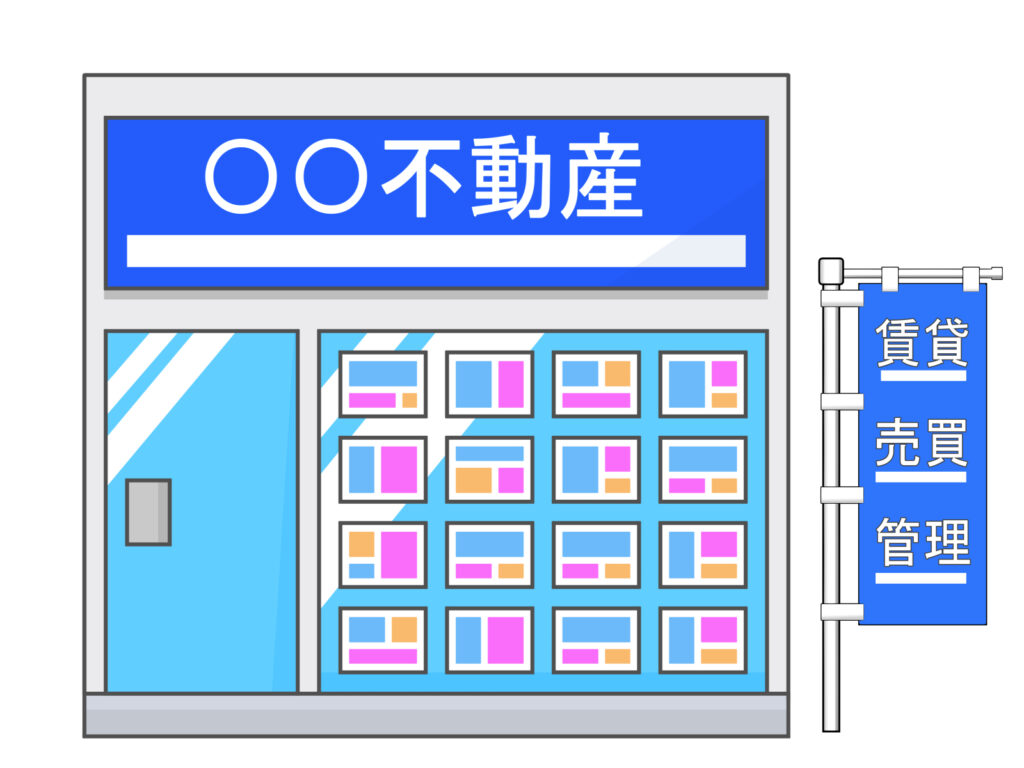
A third option is to visit real estate shops in the neighborhood directly.
Why this can be helpful
Local agencies are rooted in the area. They often have relationships with local landlords and may be able to introduce many properties within that neighborhood. In most cases, they are available for walk-ins, but they can be busy at times. To make the most of your visit, and if you want to discuss your situation in detail, it’s better to contact them in advance. In some cases, they may even sit down with you and search for properties together on online portals.
The downside
Unless it’s an area with a large foreign population, local agencies often are not used to working with foreign clients, and they may not handle “foreigner-friendly” properties. To be honest, bridging the language barrier takes extra effort for them. On top of that, since many landlords still say ‘no’ to foreign tenants, the search can be quite time-consuming, which, unfortunately, means some agents are hesitant to take on the challenge.
Given these realities, it’s most practical to either look for foreigner-friendly agencies online or get a personal recommendation from someone who has gone through a similar experience.
If You Found a Property You Like, What Happens Next?
So, let’s get back to the starting point.
When you use a listing portal and find a property you’re interested in, what happens next?
When you inquire through any of the portals, the real estate company that posted the property responds, and if the property is still available and you want to view it, they start coordinating viewing dates. This is where your communication with the company really begins.
But here’s the question:
Just because you liked one listing and contacted that company,
Is that company really the right one for you?
If the property is a perfect fit and everything goes smoothly, that’s great.
After you see the property in person, you may feel like… “Hmm… not sure.” And if you don’t know Japan’s housing standards or common trade-offs, you might not even be able to judge whether a property is truly good or not.
This is where working with the right agent becomes essential to avoid regret later.
Naturally, the next question is how to find a good agent.
Important Cautions When You Rely on a Real Estate Company
Before getting into how to find the right agent, let me briefly explain how the Japanese real estate industry works.
When browsing property portals, you may notice that while the company name is shown, the individual agent’s name is rarely displayed.
In Japan, independent agents are still relatively rare. Most “agents” work inside a company organization. That means they may move based on internal company logic, logic you may not know about unless you understand how Japanese real estate companies operate.
If you don’t know this, you could end up making costly mistakes or feeling pressured into a decision that isn’t right for you.
Even if you contact a company because of one specific listing, that company may not necessarily be the best match for you.
Here’s something many first-time expats don’t realize, and your agent doesn’t tell.
Common issues to be aware of
- If the company also manages properties, they are more likely to introduce their own managed units first. That can mean you may not receive broad options. Even if you don’t love what they show you, you might hear something like, “We don’t have any other options to show you.”
- Many agents are driven by efficiency and commission logic.
Some real estate agents want to close deals with less time and effort, and want to work on higher-rent properties. This pressure can be stronger for agents working inside a company structure (not always, but it happens).
In companies with a strong efficiency-driven culture, they may not patiently search for the best match for your needs. You may feel they keep recommending only expensive units. It can also happen that they only show listings where the company earns a better commission rate.
(That said, I have worked with many real estate companies as both a professional and as a property owner, and I can say there are also sincere and honest agents.)
- The person helping you may not be a licensed professional.
In Japan, there is a qualification called 宅建士 (Takken-shi), a national real estate transaction specialist license.
However, the “agent” who assists you may not necessarily be licensed. In some cases, the person handling your case may have very limited knowledge or experience.
Legally, even without the license, they can still do client communication, property tours, and contract preparation.
But real estate contracts in Japan can be extremely detailed, with property-specific conditions and different clauses depending on the unit. To handle these transactions smoothly and safely, it’s clearly better to work with an agent who has the 宅建士 qualification from the start.
I highly recommend confirming whether your agent holds the license.
- You often don’t know who your assigned person will be.
While some listings may display a specific contact person, in most cases, the company simply assigns someone internally once you inquire. This means you won’t know exactly who will be responding until you hear back from them.
- Some agents don’t aim to build a long-term relationship with clients.
This industry often has high turnover, and it’s common for the mindset to be: “This is a one-time transaction.”
Which Agents Can Show You the Most Options?
When looking for a real estate agent, most people naturally assume that the best choice is a company or agent with access to the largest number of listings.
That assumption makes sense. After all, more listings should mean more options, right?
However, what many people don’t realize is that in Japan, the actual number of properties an agent can introduce is largely the same, regardless of the company or agent you contact.
Why Listing Volume Is Not the Real Differentiator
In Japan, there is a professional property information-sharing system used among licensed real estate companies to ensure transparency and fairness in transactions.
For property sales, listings are generally required to be registered in this system, meaning they are broadly accessible to other real estate companies.
For rental properties, registration is not legally mandatory. Given how quickly properties move and the specific requirements of landlords or agencies, not all the properties make it onto this platform. That said, from a landlord’s perspective, vacant units mean lost income. As a result, a large portion of rental listings are still shared through this professional network so that tenants can be found quickly.
Although as mentioned earlier, some properties are managed exclusively by a single company and are not available through other agencies, but In practice, most rental properties can be introduced by almost any real estate company.
So the real question is not:
“Which company has more listings?”
But rather:
“Who will represent your interests best?”
How to Choose the Right Agent

Now that you have a better understanding of how the industry works, let’s get back to the core point.
So how do you actually choose a good agent?
1) Choose an agent who listens carefully and helps you clarify what you want
You may not have a clear picture of your life in Japan yet. Your preferences may still be vague.
A good agent will listen carefully, help you shape your needs into something concrete, and work to bridge the gap between your expectations and Japan’s real housing realities.
Because you may not be familiar with Japan, it is important to work with an agent who can proactively point out and advise on issues that foreigners often overlook even if you don’t know to ask about them.
2) Find an agent who will truly spend time searching for you
Agents usually search through the professional platform that mentioned above. The platform can narrow down options using detailed conditions and filters.
But here’s the key:
How agents adjust the conditions, change search patterns, and refine the search takes experience and a strong “search sense,” as well as a deep understanding of your preferences.
You can often tell the quality of an agent by whether they’re willing to spend real time doing this work for you, trying different angles, not giving up, and genuinely making an effort to find good matches.
Choose someone who gives you the feeling:
“They’re really trying to find something for me.”
3) Choose an agent with the 宅建士 (Takken) license
As mentioned above, real estate contracts in Japan are detailed and can vary by property. For peace of mind, it’s highly recommended to choose an agent who holds the 宅建士 qualification. Holding a Takken-shi license indicates that the agent has the skills to accurately interpret detailed property conditions, contractual terms, and important points to be aware of.
4) Avoid agents who are driven by company convenience
If the agent is forced to push the company’s own managed properties, or if they prioritize speed and efficiency over your needs, you may not get the best options.
Choose an agent who is willing to take time, listen carefully, and offer a broad range of choices—even if it takes effort.
5) Choose an agent experienced with foreign clients
Contracts with foreign clients require both specialized know-how and additional effort.
It’s important to choose someone who:
- understands Japan’s real estate customs and practices
- has a deep understanding of how to handle transactions with foreign clients,
- understands the points that tend to confuse foreigners,
- and can explain them clearly.
6) Choose an agent who can negotiate in Japanese, not only in English
Your agent will communicate and negotiate with the real estate company or agent on the landlord’s side, handling all discussions related to conditions, applications, and coordination on your behalf.
For this reason, it is essential to work with an agent who can communicate effectively with Japanese real estate companies in Japanese.
Furthermore, in Japan, the final decision on whether a tenant is accepted is made by the landlord. While in-person interviews are now rare, individual landlords almost always ask, “What kind of person is the applicant?” They want to know aspects that documents alone cannot show such as whether the applicant seems reliable, responsible, and trustworthy.
From the perspective of the landlord’s real estate company, introducing a problematic tenant can damage their relationship with the owner. As a result, if they have any concerns, they may communicate those concerns to the landlord.
Given this reality, it is highly advantageous to have an agent who can represent you effectively and create a positive impression from the very first inquiry. An agent who presents you clearly and professionally to the other real estate company can increase the likelihood of receiving the landlord’s approval.
7) Choose an agent who knows the area you want to live in and Japanese housing realities
There are many things you simply can’t understand from numbers, photos, or listings alone, such as:
– what a neighborhood actually feels like
– what types of residents tend to live there
– the overall “class,” atmosphere, or vibe of the area
– and the real pros and cons of specific buildings and unit layouts
An experienced agent will visit properties in person and pick up on both positive and negative details that are easy to miss. This includes the atmosphere of the residents, the demeanor of the building manager, potential concerns related to surrounding buildings, as well as unexpected conveniences.
To properly recognize and interpret these factors, it is essential to find an agent who is deeply familiar with Japanese culture, local customs, and day-to-day living in Japan.
Find an agent who can see beyond the numbers and listings, and who can interpret these details through a deep understanding of Japanese culture and local living conditions.
Why Not Try Working with an Independent Agent?
When foreigners search for housing in Japan, they often have limited information and limited access to insider knowledge. That’s why finding a trustworthy agent is the first step to finding a home with less stress.
If you rely on a company you contacted through a portal listing, you may face the issues described above—and you can’t always tell whether they’re truly acting in your best interest.
So why not try finding an independent agent?
About Me: An Independent Agent in the RE/MAX Group
I belong to the RE/MAX group, but I am a fully independent agent.
Because I am not employed by a company, I don’t recommend properties based on company convenience or internal priorities. I will never push a property that doesn’t benefit you.
I have been involved in real estate for a long time, and I have personally experienced many different stages myself including renting, moving overseas, purchasing, and selling.
I was born and raised in Tokyo, so I know Tokyo extremely well.
I genuinely love looking at homes, and when I see property listings, I naturally start imagining what life there would be like
I also deeply understand or at least try to understand how challenging it can be for foreigners to live in Japan, because I have lived abroad myself as an expat.
When you relocate, it’s natural to have many small but important questions and uncertainties. I support clients not only with real estate matters, but also with everyday life concerns during the move, after they have settled in, and even when they relocate again or return to their home country.
I support my clients with sincere care, so you can find a home that truly matches your needs and so you can feel reassured and confident throughout the process.
If you’d like personalized support—from housing to relocation logistics—the consultation is completely free, and I’m happy to help you plan a smoother start to life in Japan.
For a complete step-by-step guide on the rental process in Japan, please refer to this article.
To learn more about why foreigners are often declined for apartments in Japan, please refer to this article.