
How to Read Rental Listings in Japan
When searching for a rental property in Japan, many foreign clients tell me that they feel overwhelmed by the amount of unfamiliar information in rental listings.
Whether it is the documents provided by a real estate agent or the details shown on online listing websites, it can be difficult to understand what each item means and which points truly matter.
This article explains what information is typically included in Japanese rental listings, how to read them correctly, and which points deserve the most attention.
We also highlight commonly overlooked details, Japan-specific rental practices, and practical tips to help you avoid misunderstandings and make more confident decisions when choosing a home in Japan.
Identifying the Property
Address
In most Japanese rental listings, the address is shown only up to the chome (district) level.
The full street number is usually disclosed later, once you contact with your real estate agent.
Even within the same building, rental conditions may differ by unit.
Always confirm the exact room number, as rent, layout, sunlight, and noise levels can vary significantly.
Access: Nearest Station and Walking Time
Rental listings include all usable train stations within reach of the property.
Walking time is calculated using the standard rule of 1 minute per 80 meters.
In Japan, distance from the nearest station is the most influential factor in determining rent.
Before searching, it is helpful to decide how many minutes you personally feel comfortable walking on a daily basis.
That said, the listed walking time does not always reflect reality.
Routes may include hills, traffic signals, or narrow streets that make the walk feel longer.
If possible, check the route in person.
In Tokyo, many residents commute to the station by bicycle, even their home to the station.
Shared rental bicycles have become increasingly popular, allowing people to cover long distances without using crowded trains.
However, Japan has a rainy season, so weather conditions should also be taken into account.
Monthly Rental Costs
Security Deposit (敷金/Shikikin)
A refundable deposit that is adjusted for cleaning and repairs when you move out. In many cases, the standard cleaning fee at move-out is clearly stated in the contract at the time of signing.
This fee covers normal cleaning only, based on ordinary use of the property.
If the unit has been used in a way that requires special or excessive cleaning—for example, heavy stains or unusual damage, additional charges may be applied, so it’s important to keep this in mind.
Key Money (礼金/Reikin)
A non-refundable payment made to the landlord.
This is a unique aspect of renting in Japan. Properties where the landlord is eager to secure a tenant quickly may offer zero key money.
If you’re looking to keep your initial move-in costs low, focusing your search on properties with no key money can be a smart approach.
Management Fee / Common Area Fee
Depending on the property, this fee may be labeled as a management fee or a common service fee.
It is paid monthly, just like rent.
To understand the true monthly cost, always add this fee to the rent.
Some listings advertise low rent in large font, but compensate with a high management fee.
Building Structure: What It Means for Daily Life
Common structures include reinforced concrete (RC) and wooden buildings.
RC buildings generally offer better sound insulation, durability, and fire and earthquake resistance, making them popular among professionals and couples.
However, rent tends to be higher compared to wooden buildings with similar specifications.
Wooden buildings are usually more affordable, but noise travels more easily and insulation can be weaker. Of course, it depends on the individual, but in Japan, many people tend to be quite sensitive to noise.
Complaints about noise may come up later, even over things that might seem minor elsewhere.
If you yourself are sensitive to noise, it’s also a good idea to keep this in mind when choosing a property.
Choosing the right structure depends on how sensitive you are to noise and comfort.
Floors and Unit Location
Listings indicate both the total number of floors in the building and the floor where the unit is located.
For example,
10階建て/8階
This means the unit is on the 8th floor of a 10-story building. There’s no strict rule of the format, and sometimes it’s written in the opposite order, such as 1階/5階建. Look for the kanji 「建」, which shows the total number of stories in the building.
In Japan, apartments on the second floor or higher are generally preferred, and rent often increases slightly on higher floors.
First-floor units may raise concerns about security, sunlight, or street noise.
That said, if these factors are not critical for you, first-floor units can be a good opportunity to reduce rent.
Floor Area and Size
Apartment size is shown in square meters (sqm). Balconies are not included in this measurement. In floor plans, you may sometimes see room sizes expressed in “J” (帖).
This unit is based on the size of one tatami mat and has traditionally been used in Japan to indicate room size. One jo (one tatami mat) is calculated as approximately 3.3 square meters.
If the apartment has multiple rooms, some listings also specify the size of each individual room, which can be helpful when visualizing the layout.
The average size:
- Studio apartments: 20–30 sqm
- 1LDK units: 35–50 sqm
- Family-sized units: 70–90 sqm
Layout Types
Japanese rental layouts are abbreviated as follows:
L : Living room, D: Dining room, K: Kitchen, S: Service room(no window)
Generally, a larger “LDK” means more space dedicated to shared living areas. Even if a property has many rooms, each room may be quite small.
When looking at a floor plan, it’s a good idea to consider whether you prefer fewer but larger rooms, or more rooms overall, and choose the layout accordingly.
1R (One Room): Kitchen and living space combined
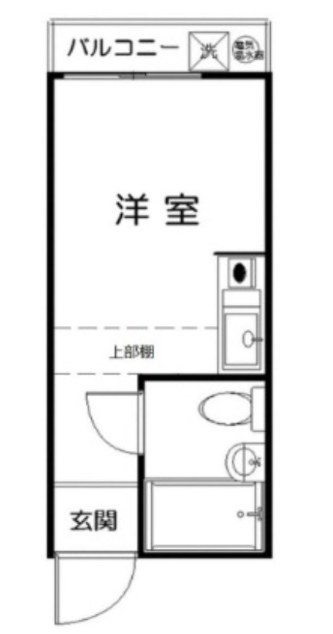
1K: One room plus a separate kitchen
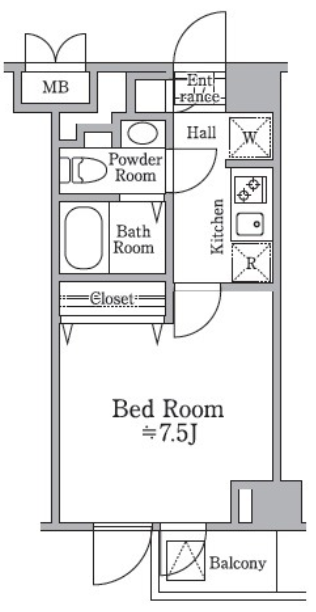
1DK: One room plus a dining kitchen
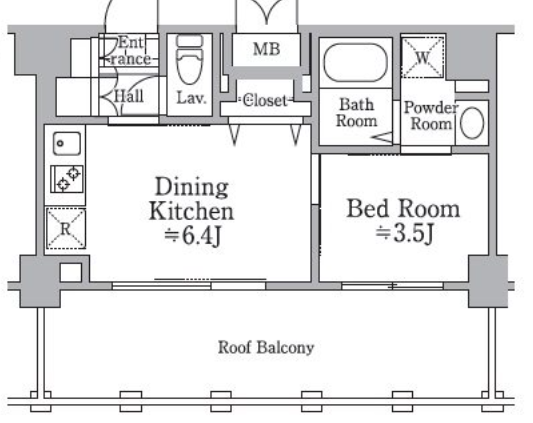
1LDK: One room plus a living, dining, and kitchen area
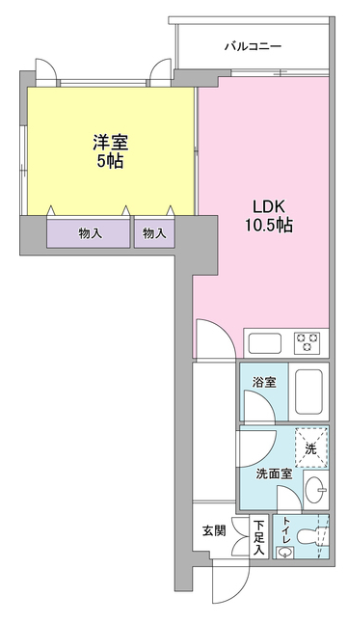
2LDK / 3LDK: Two or more bedrooms plus a living, dining, and kitchen area
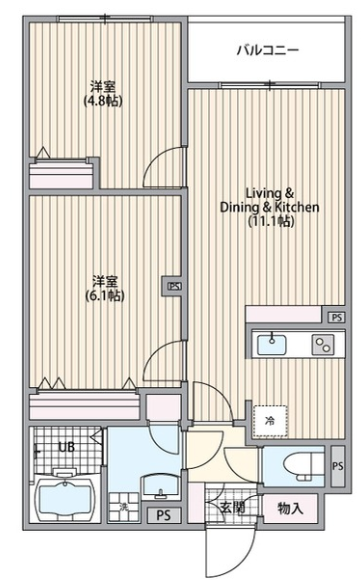
In some floor plans, the dining area and living room are separated by sliding doors. By opening them fully, the space can be used as one large open area.
For example, when guests come over, you can also close the doors and use part of the space as a temporary guest room, allowing for flexible use of the layout.
This kind of design is a practical solution that’s quite unique to Japan, where living spaces tend to be smaller. It’s an interesting detail to look out for when reviewing floor plans.
Age of the Building and Earthquake Standards
Listings provide the exact year and month of construction.
Newer buildings tend to have higher rent.
Japan is an earthquake-prone country, and in June 1981, a new seismic resistance standard was introduced.
For safety and peace of mind, it is recommended to choose buildings constructed after June 1981, as they comply with modern earthquake regulations. That said, Even older properties can be fully renovated and full of character, making them unique and interesting places to live.
Because of this, limiting your search to brand-new properties only may cause you to miss out on some great options.
Current Status and Move-in Timing
Some units may still be occupied by a current tenant.
Listings also show the earliest possible move-in date, which serves as the basis for negotiating your actual move-in date.
Lease Types and Contract Duration
Most standard leases in Japan are for two years.
With a standard lease, you can usually cancel at any time by giving one to two months’ notice.
However, early termination within the first six months or one year may result in a penalty.
Some properties are offered under fixed-term leases.
With this type of contract, the lease ends automatically at the end of the term, often after two years.
Fixed-term leases are typically used when the owner plans to use the property in the future.
In some cases, landlords also prefer this structure to limit tenant renewal rights.
While renewal may be possible, you should always assume that you will need to move out at the end of the term.
Early termination is generally not permitted for fixed-term leases, except in unavoidable circumstances.
Renewal Fees
For standard leases, staying beyond the initial two-year term requires contract renewal.
Typically, the renewal fee is one month’s rent, plus an administrative fee paid to the real estate agency.
Some properties advertise “no renewal fee,” which can be attractive if you plan to stay long-term.
When deciding whether to renew or move, consider not only the renewal fee, but also moving costs, time, and effort.
Brokerage Fee
The brokerage fee is paid to the real estate agency that arranged the rental.
It is typically one month’s rent plus 10% consumption tax.
Fire Insurance
Fire insurance is almost always mandatory.
It usually covers fire, water damage, and certain liability risks.
The typical cost is ¥20,000–¥30,000 for two years.
Guarantor Company Fees
Most rentals now require a contract with a guarantor company instead of a personal guarantor.
For foreign tenants, this is almost always mandatory.
The initial fee is typically 50%–100% of one month’s rent, with an additional monthly fee of about 1%–2% of the rent.
Amenities: How to Choose Wisely
Rental listings often include long lists of amenities, which can be reassuring at first glance.
However, more amenities often mean higher rent, even if you do not actually need them.
Understanding your own priorities is key to making a smart choice.
Amenities Commonly Valued by Foreign Renters
High-priority items include a separate bathroom sink, an indoor washing machine space, air conditioning, and a two-burner stove.
In many low-priced studio apartments, the bathtub, toilet, and sink are combined into a single small unit, which many foreign renters prefer to avoid.
Additional features that significantly improve comfort include auto-lock entrances, video intercoms, package lockers, bathroom dryers, reheating bath systems, free internet, walk-in closets, dishwashers, and elevators.
Key Takeaways
- Focus on the true monthly cost, not just advertised rent
- Decide your acceptable walking distance before searching
- Check building structure and floor level for comfort and noise
- Confirm lease type and renewal conditions carefully
- Choose amenities based on lifestyle, not marketing appeal
With a clear understanding of how to read rental listings, you can avoid unnecessary stress and find a home in Japan that truly fits your needs and lifestyle.