
Kyoko Estate Theme

Understanding Japan’s Real Estate Registration System

Overview

When buying real estate, the way ownership rights are protected differs greatly from country to country.
Each nation has its own legal framework for recording and securing property ownership — and for many buyers, closing on a property is often a moment of both relief and excitement.

In Japan, this key step is known as real estate registration (fudōsan tōki, 不動産登記).
It plays a central role in confirming and protecting ownership, ensuring that your rights are legally recognized and transparent.

Registration in Japan is not merely a formality; it is what gives ownership its legal power against third parties. Without registration, ownership may exist in theory, but not in practice.


Even if you have acquired ownership through a legitimate transaction, failure to complete registration means you cannot assert your ownership against a third party who has properly registered their rights, and in the worst case, you may be forced to hand over the property despite having paid for it.
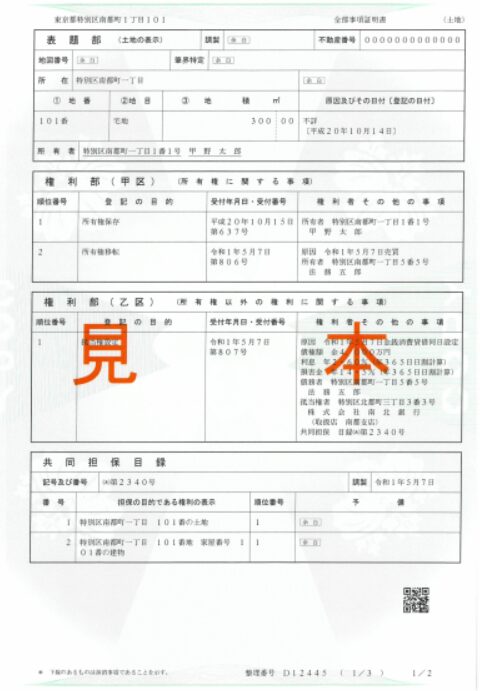
Sample of Real Estate Registry (from the Ministry of Justice website)

A Little Bit of History Behind Japan’s Real Estate Registration System

While many countries have some form of property registration, Japan has developed its own version of real estate registration: a system rooted in continental European civil law but refined through Japan’s legal and cultural evolution.

During the Meiji era, Japan was modernizing its legal infrastructure by adopting Western legal concepts, and it drew heavily on civil law systems from continental Europe. However, Japanese society was distinct in many ways:

  1. Private land transactions were already common.
  2. The land title system (chiken seido) was immature.
  3. Legal culture emphasized actual possession and private contracts over state authority.

Legal culture emphasized actual possession and private contracts over state authority.

As a result, Japan gradually formed its own model—one that evolved from European civil law principles but adapted to Japan’s social and economic realities.

Thus, Japan’s system shifted from “state-guaranteed ownership creation” to “public registration of private agreements.”
The government acts as a neutral recorder, not the guarantor, of ownership.

Situations Where Real Estate Registration Is Done

In Japan, registration of a newly built property is legally mandatory; this is called the Building Description Registration (tatemono hyōdai tōki).

However, registration after purchasing an existing property is not strictly required by law.
That said, it is almost always carried out in practice, because without registration, your ownership rights may not be legally protected against third parties.

From April 2024, one specific type of registration — inheritance (succession) registration — has become legally mandatory.

Even when registration itself is not an obligation, it is considered an essential step for protecting your ownership and ensuring the transaction is properly recorded.

The following are the typical situations where real estate registration is carried out in Japan:

1. When You Acquire Property

For purchases, inheritance, or construction of a new building:

  • Transfer of Ownership Registration (shoyūken iten tōki)
  • Building Description Registration (hyōdai tōki)
  • Ownership Preservation Registration (shoyūken hozon tōki)

2. When You Change Your Address or Name

After moving or changing your surname, file a Change of Address/Name Registration so your information stays accurate.

3. When the Owner Passes Away

Heirs register the Transfer of Ownership by Inheritance to show succession of title.
(This type of registration became mandatory in April 2024.)

4. When a Mortgage Is Paid Off

After full repayment, the Mortgage Cancellation Registration (teitōken masshō tōki) is filed to remove the lien.

5. When a Building Is Demolished

A Building Demolition Registration (tesshitsu tōki) is filed to remove the building from the record.

How the Registration Process Works

In Japan, it is not legally required to hire a Judicial Scrivener (Shiho-shoshi, 司法書士) to complete real estate registration.
Anyone — including the property owner — can technically file the application on their own.

Staff at the Legal Affairs Bureau (Hōmukyoku) are generally helpful and will explain the procedures or advise how to correct any mistakes if the application is incomplete.
So, if you are patient and careful, it is entirely possible to complete the registration yourself.

However, in real estate transactions involving large sums of money, there is always a risk if the registration is not completed properly or promptly.
Unless the registration is completed in your name, your ownership is not legally protected, and unexpected problems could occur.
For this reason, it is standard practice to ask a Judicial Scrivener to handle the registration, ensuring that ownership is accurately and safely recorded at the same time the payment is made.

Step-by-Step Process

  1. Application
    The application form and required documents are submitted to the Legal Affairs Bureau that has jurisdiction over the property.

  2. Examination
    The Bureau reviews and verifies the documents.
    This review period typically takes about 1–2 weeks, depending on complexity and regional workload.
  3. Completion of Registration
    Once the examination is finished, the new ownership or rights are officially entered into the registry.
    When the new owner’s information is registered, a Registration Identification Notice is issued.
    This document replaces the old Title Deed and consists of a 12-digit alphanumeric code identifying the registered owner.
    It is an important document required when selling the property, so it should be kept in a safe place.
    Although the Registration Identification Notice cannot be reissued, alternative procedures are available if it is lost — such as verification through a judicial scrivener or identification affidavit during future transactions. In addition, once the registration is completed, a Certificate of Completion of Registration is also issued.
    While this certificate cannot be reissued, it is not as critical as the Registration Identification Notice,
    so losing or disposing of it does not cause legal problems.
  4. Issuance or Delivery of Documents
    • In-person pickup: After the expected completion date, you can collect the documents at the Legal Affairs Bureau counter.
    • By mail: If you opted for postal delivery, the Registration Identification Notice or Certificate of Completion will be sent, usually by registered mail.
      In this case, allow an additional few days — the entire process from application to document arrival may take about 2–3 weeks in total.

Documents Commonly Required

The documents required for registration vary depending on the cause of registration — such as sale, inheritance, gift, or mortgage cancellation.
Always confirm the specific requirements with your Judicial Scrivener or the Legal Affairs Bureau (Hōmukyoku) before submission.

Common documents include:

  • Power of Attorney (if a scrivener acts for you)
  • Application Form (available on the Ministry of Justice website)
  • ID Verification (passport, residence card, or My Number card)
  • Supporting Documents such as:
    • Deed of sale or inheritance certificate
    • Mortgage discharge documents

Reading and Understanding the Real Estate Register in Japan

In Japan, land and building registry records are publicly accessible.
Anyone can obtain a copy of a property’s Real Estate Register (登記事項証明書, tōkijikō shōmeisho) by paying a small administrative fee at the Legal Affairs Bureau or online.

From this record, you can find who owns a property, what rights or mortgages are attached, and even trace how ownership has changed over time — sometimes revealing the unique “story” of a property’s history.

Before purchasing, the seller or agent usually provides a copy, but buyers should always review it themselves carefully.
Below are the key sections and what to look for when reading a Japanese property registry:

1. Title Section (Hyōdaibu): Physical Details of the Property

Lists the basic physical information about the property.
Be sure all entries match the property you intend to purchase.

  • Location (Address, Lot Number, Building Number) – Confirm that it matches the actual site.
  • Land Category / Building Type and Structure – Ensure the registered use (e.g., residential land, farmland) matches current use.
    Note: Using farmland as residential land requires special permission.
  • Land Area / Floor Area – Compare with your sales contract and property summary; if different, ask why.
  • Construction Date and Cause – Check the building’s year and registration basis.

2. Rights Section A (Kōku – 甲区): Ownership Information

Shows who legally owns the property and any limits on that ownership.

  • Current Owner: Confirm that the seller’s name and address match the registry.
  • Ownership History: Review for frequent transfers or complex inheritance chains.
  • Seizure or Provisional Disposition: Avoid properties with these legal claims.

3. Rights Section B (Otsuku – 乙区): Other Rights and Encumbrances

Lists non-ownership rights, such as loans, mortgages, or easements.

  • Mortgages / Revolving Mortgages: Identify any collateral rights.
  • Mortgage Cancellation: Confirm that repayment and release will be done at transfer.
  • Easements / Lease Rights: Check for usage restrictions or long-term leases.
  • Provisional Registration: Look for kari-tōki, indicating pending claims.

Why Reviewing the Register Matters

Reading the registry helps confirm true ownership, debt-free status, and legal security of the property, which are essential for a safe and transparent transaction.

Registration and Professional Fees in Japan

Registration and License Tax (Tōroku Menkyozei)

This is a national tax imposed when registration is made. In general, the tax base for the registration and license tax is the assessed value (valuation) recorded in the Fixed Asset Tax Ledger or the Fixed Asset Tax Statement.
If no such value is registered, the Legal Affairs Bureau (registrar) determines the valuation to be used as the tax base.

For a transfer of ownership, the registration and license tax is calculated as 2% of the property’s appraised value.
However, tax reduction measures are available under certain conditions, so the actual amount payable is often lower than this standard rate.

Professional Fees for Judicial Scriveners (Shiho-shoshi) and Land & House Surveyors

Real estate registrations are generally handled by Judicial Scriveners (Shiho-shoshi),
while Land & House Surveyors (Tochi-kōka-chōsa-shi) manage “title description” registrations, such as for newly built houses.

Fees vary widely depending on region and office, but the typical cost for a transfer of ownership registration in Japan ranges from approximately ¥50,000 to ¥100,000.

Additional costs may apply:

  • Travel fees if the scrivener attends settlement at a bank or seller’s office.
  • Identification report fee when the seller is not personally known to the scrivener.

Why Japan’s System Is So Reliable

As mentioned above, Japan’s real estate registration is based on a paper examination system,
in which registrars review submitted documents rather than conduct on-site inspections.
While the government ensures procedural integrity, it does not guarantee the factual accuracy of the registered information.

Even so, Japan’s registration system has earned a reputation for remarkable reliability, thanks to its precision, consistency, and openness.
This trust is supported by several key features:

  • Administered nationwide by the Ministry of Justice
  • Digitized and standardized across all regions
  • Fraud or clerical errors are extremely rare and legally correctable
  • Public access to records, promoting transparency and market confidence

Final Thoughts

Legal systems can be complex, and even more so when you’re dealing with it in a foreign country.
I hope this article has helped you better understand how Japan’s real estate registration system works.
With the guidance of qualified professionals such as judicial scriveners and real estate agents,
you can feel confident that your property transaction in Japan will be handled safely and smoothly.

Disclaimer:
The information in this article is provided for general informational purposes only and does not constitute legal advice.
While every effort has been made to ensure accuracy, the content may not reflect the most current legal developments.
Readers should consult a qualified professional for advice on their specific situation.

Note:

In December 2025, the Ministry of Justice announced that individuals acquiring real estate in Japan will be required to disclose their nationality when registering ownership.

If you are considering a property purchase in Japan, I’d be happy to assist you.
I specialize in serving international clients and provide clear, detailed explanations of Japan’s real estate system and local practices for those unfamiliar with the market.
By leveraging the strengths and global network of RE/MAX, I offer reliable, well-informed support throughout the entire process. Initial consultations are completely.
How to Operate Your Japan Property as an Airbnb / Short-Term Rental (Minpaku)

Many of my international clients tell me the same thing:

“I visit Japan frequently and want to purchase my own property—but since I won’t be here all the time, I’d like to rent it out on Airbnb when I’m away. Is that possible?”

In Japan, renting out a property through platforms like Airbnb is commonly referred to as Minpaku. While Minpaku is not a strict legal definition, it generally means renting all or part of a private residence to paying guests.

If you’re considering buying property in Japan and operating it as a short-term rental, this guide will help you navigate the legal systems, licensing options, zoning rules, and market opportunities.

Minpaku Market Trends

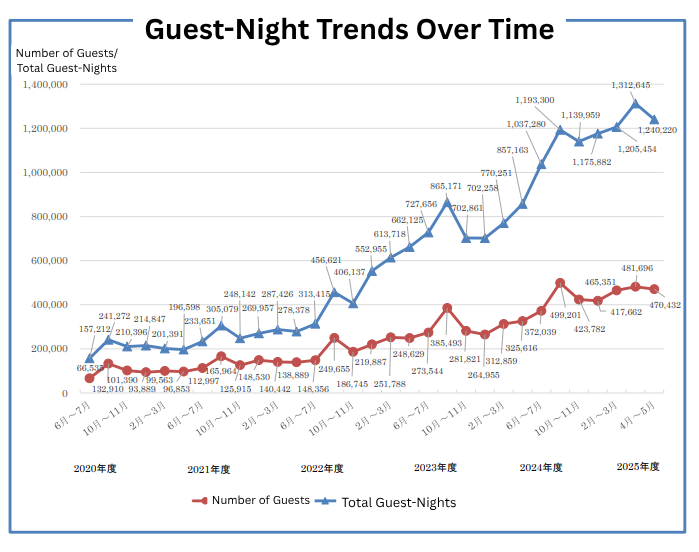
Japan’s Minpaku market has continued to grow steadily since the Private Lodging Business Act (Minpaku Shinpō) came into effect in June 2018. When the law was first introduced, there were only 2,210 registered properties nationwide. But as inbound tourism increased and local governments refined their regulatory frameworks, the number of registrations expanded year after year.


Guest-night statistics (Source: Japan Tourism Agency, 2025)

By 2025, with tourism rebounding strongly, the total number of Minpaku notifications reached a new record high. For foreign buyers considering short-term rental operations in Japan, this trend shows that the market remains active, regulated, and full of opportunity.

Start Here: Understanding Minpaku Basics

Before explaining how to start Minpaku, such as obtaining permits, choosing a property, or preparing your operations, it’s important to understand the fundamental legal frameworks that govern Minpaku in Japan. These rules determine what type of operation you can run, where you can run it, and what procedures are required.

Before you can decide how to operate Minpaku, it’s essential to understand that Japan recognizes several different legal categories of short-term rentals—each with its own rules, advantages, and limitations. Operating without permission is considered illegal Minpaku and may result in criminal penalties. 

Whether you already own a property or are planning to purchase one, the first step when considering Minpaku is to decide which operational framework best fits your goals.

Choosing the right one will determine how often you can rent out your property, what procedures you must follow, and even which locations are legally eligible.

Types of Minpaku You Can Operate in Japan

Here are the three legal categories:

1. Simplified Lodging (Hotel Business Act)

A full hotel/inn license for operating more than 180 nights per year. This framework is regulated like a small hotel, with strict facility and safety requirements. You should also be aware that hotel/inn businesses can only be operated in zones where such use is allowed under Japan’s zoning regulations.

2. Special Zone Minpaku

Allowed only in designated National Strategic Special Zones such as parts of Tokyo and Osaka. There is no limit on operating days, but availability is limited. In Tokyo, for example, the only ward authorized for Special Zone Minpaku is Ōta Ward. (Cabinet Office – National Strategic Special Zones:)

3. Private Lodging Business (Minpaku Shinpō)

The most easy option.
Allows operation for up to 180 days per year, even in residential zones.
If the host does not live on-site, hiring a licensed Minpaku management company is mandatory. I’ll go into more detail in the following section. (Japan Tourism Agency – Starting a Private Lodging Business)


CategoryPrivate Lodging Business (Minpaku Shinpō)Special Zone MinpakuSimplified Lodging (Hotel Business Act)
Operating DaysUp to 180 days/yearNo limitNo limit
Where You Can OperateResidential zones allowedOnly in designated strategic zonesCommercial-use zones only
Permit / NotificationNotification filing requiredSpecial Zone approval requiredFull hotel/inn license required
Renovation RequirementsMinimal (basic home facilities only)ModerateOften extensive renovations required
Management RequirementLicensed management company required if host-absentLicensed operator requiredSelf-management or licensed operator
Difficulty LevelEasyMediumHigh
Best Suited ForOwners renting part-timeProperties in designated zonesFull-scale hospitality business

Private Lodging Business (Minpaku Shinpō)

The Easiest Way to Start Minpaku in Japan

Since the Private Lodging Business Act (Minpaku Shinpō) is the easiest framework to begin with, and the most suitable for owners who don’t plan to operate a full-scale Minpaku business, this article will focus on this option.

Advantages:

1. Easier and Faster to Start

Unlike hotel licenses, this system requires only a notification filing, not a full inspection-based approval. As long as you submit the required documents and meet the criteria, the filing is accepted.

2. No Major Renovation Needed

If your property already includes the essential four facilities (kitchen, toilet, bathroom, and wash basin), no major construction is legally required under the Private Lodging Business Act. In contrast, the Hotel Business Act often requires substantial renovations; for example, installing additional fire safety equipment, widening hallways, upgrading ventilation systems, or meeting stricter structural standards similar to a small hotel.

3. No Change of Building Use Required

Under Japanese law, hotels and inns require a different building classification than regular homes. Normally, converting a house into a lodging facility requires a formal “change of use,” which involves inspections and renovation work.
With Minpaku Shinpō, you can operate short-term rentals without changing the building’s official classification, saving both time and cost.

Disadvantages:

1. 180-Day Operating Limit

You may operate only up to 180 days per year.
Many municipalities impose their own additional restrictions, such as allowing Minpaku operations only on weekends, so the actual rules can vary greatly depending on the area. Because these rules differ widely by municipality, checking local regulations is essential.

If you wish to exceed 180 days, one option is to switch to monthly rentals, which fall under long-term leasing regulations. For example, operating as Minpaku during peak travel seasons and switching to long-term or monthly rentals during quieter periods. This hybrid approach allows you to maximize occupancy while staying fully compliant with the law, while also giving you the flexibility to reserve the property for your own stays.

2.“Residential Dwelling” Requirement

The Minpaku Shinpō allows only residential dwellings to be used for short-term rentals. Although this may sound simple, the legal definition is much stricter than many people expect. To qualify as a residential dwelling, the property must be actually used—or clearly intended to be used—for living purposes.

Because of this, some properties cannot be used for Minpaku right away. For example:

  • Newly built homes that have never been occupied, and
  • Long-vacant properties

may not meet the legal requirement unless you can prove actual residential use, active tenant recruitment, or periodic occupancy by the owner.

This can be an unexpected obstacle for buyers. So it’s essential to verify the property’s eligibility before proceeding with any Minpaku plans.

3. Mandatory Management Company (If Host-Absent)

There are two operational styles under the Private Lodging Business Act: host-staying and host-absent. The requirements differ significantly between the two.

If your goal is to rent out the property while you are not staying there, your operation will naturally fall into the host-absent category.

The host-staying model requires the owner to live on-site during guest stays and handle responsibilities such as guest interaction, ID verification, and daily oversight. Because of these obligations and time commitments, it can be difficult for individuals who also work full-time or live abroad to manage this model effectively.

For this reason, the host-absent model is generally the more realistic and practical choice for foreign property owners.

Host-absent Minpaku must be managed by a licensed Minpaku management company registered with the Japanese authorities. These companies handle all legally required operations allowing you to run your Minpaku smoothly even if you live overseas.

List of registered Minpaku management companies

4. Waste Disposal Rules

This may seem like a small detail, but waste disposal rules can be unexpectedly strict and vary significantly by municipality. Some municipalities do not collect business-related waste from Minpaku operations. In these areas, you cannot simply use the normal household garbage system. Instead, you must contract a private waste disposal company to handle trash generated by guests. This may include arranging regular pick-ups, paying additional service fees, and following local rules on separation and disposal. If you are working with a Minpaku management company, they will typically take care of this entire process, so you don’t need to worry about it yourself.

Application Process

To operate under the Private Lodging Business Act, you must submit a formal notification to the prefectural government. Although the process is simpler than obtaining a hotel license, it is still fairly detailed and can be challenging for first-time applicants, especially if you are overseas or do not read Japanese.

Your submission must include:

  • Applicant information (name, address, contact details)
  • Property details, including exact location and legal classification
  • Floor plans showing all required facilities
  • Corporate director names (if you are applying as a company)
  • Guardian information (if the applicant is a minor)
  • Proof of eligibility, such as certificates confirming you are not bankrupt or legally disqualified

The documents must be prepared in Japanese and follow each municipality’s specific format and instructions. Some prefectures require additional supplementary documents or clarifications, and even small mistakes can delay acceptance of your notification.

Because of these complexities, many applicants choose to hire a licensed administrative scrivener (Gyoseishoshi) to handle the application.

The cost of hiring an administrative scrivener (Gyoseishoshi) to handle the Minpaku application varies depending on the region and the specifics of your property. Generally speaking, the typical range is around ¥50,000 to ¥120,000.
If you need an administrative scrivener who can provide full English support, the fee is often slightly higher, but for many foreign owners, the added clarity and smoother communication are well worth the investment.

Detailed instructions: https://www.mlit.go.jp/kankocho/minpaku/

Choosing the Right Property for Minpaku

If you don’t yet own a property, your biggest question is likely how to choose a home that can actually be rented out as Minpaku. This decision is crucial, selecting the right property from the start will determine whether your Minpaku operation is successful, compliant, and sustainable in the long run.

Now that you understand the key legal frameworks surrounding Minpaku in Japan, and have clarified the strategy you want to pursue, let’s move on to the next critical step: identifying the locations that best align with your goals.

Where Minpaku Properties Are Concentrated

Minpaku registrations in Japan are not spread evenly across the country. They are heavily concentrated in major tourism and transportation hubs. The prefectures with the highest number of registered Minpaku homes include Tokyo, Osaka, Hokkaido, Chiba, and Fukuoka, all of which benefit from strong visitor demand and well-developed travel infrastructure.

Recent data from the Japan Tourism Agency shows this concentration clearly. Nationwide, total guest-nights reached 1,240,220, representing 119.6% growth compared to the same period the previous year.

Among all prefectures, Tokyo ranks first with 595,494 guest-nights, followed by Hokkaido (188,031) and Osaka (49,119). This shows how strongly Minpaku demand aligns with tourism intensity. Although Kyoto is one of Japan’s major tourism destinations, the number of registered Minpaku properties is surprisingly low. This is largely due to the exceptionally strict local regulations that make it difficult to operate Minpaku legally within the city. 

Within Tokyo itself, Minpaku activity is further concentrated in a handful of highly visited wards, including Shinjuku, Taito, Sumida, Shibuya, and Toshima, where major railway stations, popular sightseeing areas, and relatively flexible municipal rules make operations smoother.

(The latest data published by the Japan Tourism Agency in 2025)

Why These Areas Show the Fastest Minpaku Growth

These regions dominate Minpaku performance for five key reasons:

1. High inbound tourism demand

Tokyo, Hokkaido, and Fukuoka are among Japan’s most frequently visited destinations.
Chiba benefits from Narita Airport and Tokyo Disneyland, attracting international travelers year-round.

2. Hotel shortages during peak seasons

In these popular cities, hotels often reach full occupancy during weekends, holidays, and large events. Minpaku fills this supply gap.

3. Exceptional transportation connectivity

  • Tokyo wards contain major hubs such as Shinjuku, Shibuya, and Ueno.
  • Chiba provides direct, fast access to Narita Airport.
  • Fukuoka’s airport is uniquely located minutes from the city center.
    This convenience makes these areas ideal for short-term visitors.

4. Favorable or flexible local regulations

Some municipalities, such as Taito and Sumida, avoid strict weekday limits, making day-to-day operations easier. However, even in these areas, complaints and neighborhood concerns have been increasing, and some districts are now considering tightening their rules. Investors should stay aware of potential regulatory changes going forward.

5. Lower acquisition costs in regional cities

Real estate in regional areas such as Chiba, Hokkaido, and Fukuoka is generally more affordable than in Tokyo. This allows investors to achieve stronger ROI while still benefiting from steady visitor traffic and robust tourism demand in these regions.

Location and Zoning Considerations

The Private Lodging Business Act (Minpaku Shinpō) was originally created to make it possible for residential properties to be used legally for short-term lodging.
For this reason, Minpaku under this framework is generally permitted anywhere residential buildings can be built from a zoning perspective. Please not that this is separate from the question of whether the property meets the legal definition of a “residence.” As far as land-use zoning is concerned, traditional hotel zoning restrictions do not apply.

Additionally, zoning alone is not enough. Additional layers such as Special Use Districts (特別用途地区) and municipality-specific rules can significantly affect what is allowed. Some cities impose:

  • limits on operating days
  • restrictions near schools
  • additional notification requirements

Because of these factors, it is essential to check both zoning and local municipal rules before purchasing a property.

Condominium Rules

Most condominium buildings in Japan explicitly prohibit Minpaku in their management bylaws. Although the data is from 2018, a nationwide survey at that time showed that 80.5% of condominium associations in Japan explicitly prohibited Minpaku. Since this was shortly after Minpaku laws were first introduced, and many buildings had not yet updated their internal rules, it is reasonable to assume that the percentage of condominiums banning Minpaku has increased in recent years.

Given this reality, the most practical property types for foreign investors are:

  • A standalone house, or
  • An entire small apartment building

Standalone homes offer flexibility but require careful attention to local neighborhood sentiment.
Entire buildings provide operational control and are often ideal for investors who want to combine long-term tenants with Minpaku usage.

Choose a Reliable Operator

Choosing the right Minpaku management company is just as important as choosing the right property, and it has a major impact on how smoothly your operation will run. Because Minpaku, especially host-absent operations, requires meticulous legal compliance, selecting a company with a strong reputation and municipal experience is essential.

Your management company should be able to handle:

  • Cleaning and linen replacement
  • Waste disposal (including arranging private collection when required)
  • 24/7 emergency support
  • Guest check-in and ID verification
  • Multilingual guest communication
  • Compliance with local regulations

And as for the fees, which owners are often concerned about, most companies charge 20–30% of your gross rental income.
However, picking a reliable operator involves much more than comparing fees.
A good operator not only keeps your property running smoothly but also minimizes neighborhood friction and legal risk.

Finding the Strategy That Fits Your Goals

As discussed, operating Minpaku is rarely feasible if you own only a single condominium unit. For this reason, standalone houses or entire buildings remain the most practical options for flexible Minpaku use.

If you already own a property, or if you do not necessarily want to purchase in a prime tourist district, you may wonder whether such locations can still work for Minpaku. While houses in residential areas are not always close to major sightseeing spots or major stations, Minpaku demand does not come only from international tourists. Many domestic travelers use Minpaku for short visits for various purposes, and many foreign visitors, including digital nomads, prefer quieter residential neighborhoods where they can stay for longer periods and experience everyday life like locals.

For those purchasing a vacation home in a regional area, it is also reasonable to assume that others may wish to enjoy the same environment you value.

Ultimately, the right approach depends on how much income you expect. If maximizing revenue is your priority—and you wish to operate more than 180 days a year—obtaining a Hotel Business Act license in a high-demand location may be worth considering. But if the property is primarily for your own use and you simply want to generate some income while you are away, occasional Minpaku or monthly rentals can be both realistic and practical. In fact, in popular tourist areas where competition is high, properties slightly outside the core may even benefit from having fewer competing listings.

Support for English-Speaking Owners

Japan’s Minpaku system offers meaningful opportunities for foreign investors, but only if you navigate the legal requirements and understand local regulations. With the right planning, you can enjoy your property whenever you visit Japan while generating income during your absence.

However, operating Minpaku from overseas presents challenges that many owners do not anticipate. While most management companies can communicate with guests in English (as they should), very few provide clear, reliable English support to property owners themselves. As a result, many foreign owners feel uncertain or disconnected from the daily operations of their own property.

To bridge this gap, I work closely with clients by:

  • helping them evaluate and choose a trustworthy management company,
  • assisting with communication between owners and operators, and
  • making sure they stay informed throughout the entire Minpaku operation.

And my support goes beyond simply showing properties.
I assist with property selection, developing your Minpaku strategy, and ensuring that you work with the right partners, because successful Minpaku management requires not just a good property, but also a reliable team and ongoing communication.

If you need help evaluating your approach, identifying Minpaku-friendly properties, or navigating communication with management companies or judicial scriveners, please feel free to contact me. I’m here to support you from the very first property search all the way through full Minpaku operation.

Disclaimer: Regulations may change. Please verify the latest requirements with a qualified professional.

Setting Up a Home in Japan: What You Should Know Before You Move

In Japan, whether you rent or buy a property, it usually comes completely unfurnished — not only without furniture, but often without basic appliances such as a refrigerator, washing machine, or even lighting fixtures.
This can be a big surprise for many newcomers. Once you decide to move to Japan, one of the biggest questions becomes:
“How do I actually start my life once I get there?”

Most people start by renting first. However, even renting can take time — once you arrive in Japan, you’ll need to search for a property, apply, sign a contract, and set up your daily essentials, which, often takes at least two to three weeks or more optimistically before your new home is truly ready.

During this transition period, you’ll likely need to stay somewhere temporarily such as a hotel, or a furnished serviced apartment. While these are convenient, they can be expensive and may not feel like home. You might start thinking, “If I’m going to spend that much, I’d rather put it toward furniture for my own place.”

On top of that, moving involves numerous tasks, adjusting to a new country, handling government paperwork, starting a new job, and house-hunting all at once. It’s easy to feel overwhelmed.

How to Buy Furniture in Japan: A Complete Guide for New Expats

To help reduce stress, I offer services that allow you to search for a home while still abroad, and even have it move-in ready before your arrival — including setup, furniture purchasing, and utility arrangements. However, in this article, I’ll focus on how and where to buy furniture yourself in Japan.

Just like in other countries, most furniture and appliances can be purchased online, but because these are large items, many people prefer to see them in person before deciding.
Even when ordering online, keep in mind that delivery may take several weeks depending on stock and location.

Start with the Basics — What You Really Need

As mentioned above, most homes in Japan are unfurnished, so you’ll likely need at least:


• A bed or futon
• Basic appliances such as a refrigerator, microwave, and lightings
• Furniture
• Curtains (yes, even these are often not included!)

Measure your rooms carefully. Japanese homes are typically compact, and furniture sizes differ from Western standards.

🎌 Yay! Your first encounter with Japanese culture — futons!
A futon is Japan’s traditional bedding, laid directly on the floor and folded away during the day to save space. It’s practical for small apartments, and airing it outside keeps it fresh in Japan’s humid climate. While fewer people use futons today, they remain a charming way to experience traditional Japanese living.

Washing machines range widely in price, from around ¥50,000 for compact models to over ¥300,000 for advanced ones. However, Tokyo now has modern, stylish coin laundries that are clean, efficient, and convenient, which are great options for singles and couples who only need to wash once or twice a week.

Where to Buy Furniture in Japan

There are a bunch of stores, so here are just a few examples to get you started. Pick what fits your budget and lifestyle.

Affordable & Easy

Nitori – Japan’s equivalent of IKEA, with furniture sized for Japanese homes. Affordable, functional, with online ordering and delivery services.
IKEA Japan – Great when you can’t find stylish yet affordable designs elsewhere. Just note that some pieces are large for Japanese apartments, and most stores are in the suburbs.
Shimachu Homes – Local chain offering furniture and home goods with setup services.

Mid-Range to Stylish

  • IDC Otsuka / Francfranc / Actus / Karimoku – Trendy, urban styles perfect for city apartments.

IDC Otsuka offers large showrooms where you can take your time exploring a wide range of furniture.

  • Muji (無印良品) – Minimalist, practical, and beautifully designed Japanese furniture.

Second-Hand & Sustainable

Hard Off / Off House – Reliable used furniture and appliances in great condition.
Facebook Marketplace / Sayonara Sales – Expats leaving Japan often sell items cheaply or even give them away — great deals if timing is right.

Independent & Designer Stores

Tokyo is full of characterful furniture stores — from world-famous brands like Cassina and Herman Miller to boutique shops and antiques.
For furniture lovers, visiting Tokyo’s Meguro-dōri (“Furniture Street”), which has over 30 interior shops, is a real treat.

Beds & Mattresses in Japan

Japan doesn’t have as many mattress-only superstores as other countries, but you can try high-quality options like:


• Showrooms of international brands: Sealy, Ligne Roset, Tempur
• Department-style retailers: IDC Otsuka
• Specialty bedding stores: France Bed and Nishikawa

Japanese mattresses tend to be thinner and smaller, not necessarily less comfortable, just different.
If you choose a Japanese brand, make sure the size matches your body and sleeping preference. Always check dimensions before purchasing.

Other Essentials

Even if some rooms have blinds, curtains are rarely included. You can get ready-made curtains from Nitori, Aeon, or Muji, or order custom ones for a better fit.
As for kitchenware and small essentials, Nitori, Muji, and Aeon offer convenient one-stop shopping.
If you love tableware, exploring Japanese ceramics and local pottery can be a fun way to personalize your dining table.

Appliances — Where to Buy

Large retailers like Bic Camera and Yamada Denki carry almost everything, with knowledgeable staff and solid after-sales support.
In major city stores, you’ll often find staff who speak English, Chinese, or other languages. 

When buying in-store, check prices online first and don’t hesitate to negotiate. You can often get a discount if you show a cheaper listing elsewhere.

You can also order online via Amazon Japan, Rakuten, or price comparison sites like Kakaku.com. If buying from non-major retailers, confirm warranty and support details first.

Don’t forget to buy lighting fixtures, as many homes have ceiling sockets but no main light included.

Delivery & Assembly — What to Expect

Most stores offer delivery and assembly for a small fee. Apartments without elevators or with narrow stairs may incur extra costs.
Even professional movers can make small mistakes, so it’s best to be present during delivery — not only to open the door, but also to ensure no damage occurs.
This is especially important for rentals, since any scratches or dents may affect your security deposit.

Need a Hand?

Shopping in an unfamiliar country can be challenging.
I offer store-accompaniment and proxy purchasing services, so you can communicate easily with staff and enjoy stress-free, efficient shopping.
Clients often tell me it made the experience both fun and smooth.

Utilities & Appliances

Your home won’t function until electricity, gas, and water are connected.
Most can be arranged online in advance — you don’t need to be home for electricity or water, but gas setup requires you to be present for a safety check.

Japan’s energy market is now liberalized, so you can choose from many providers.
If you’re unsure, in Tokyo you can’t go wrong with Tokyo Electric Power (TEPCO) or Tokyo Gas — the difference between companies lies mostly in pricing and service.

Also note: Japan uses 100V two-prong Type A outlets, the same plug shape as in the U.S. but with slightly lower voltage, so check appliance compatibility.

Internet Options in Tokyo Apartments

You have several options — from pre-installed internet to plug-and-play routers:

There are multiple ways to get connected, from pre-installed building internet to carrier Wi-Fi routers. Watch contract terms and cancellation fees.

1) Pre-Installed Internet

Many modern apartments include building-contract internet. Plug in your router or use the provided login.

  • Pros: Ready on move-in / no installation / often included or low fee
  • Cons: You can’t choose the provider freely (though you can sign a separate plan), and speeds may slow during peak hours.

Common examples: NTT FLET’S Hikari (bulk), J:COM NET (cable)

2) Fiber-Optic Internet (Hikari Kaisen)

Fastest and most stable; ideal for long-term residents and remote work. (1–2 Gbps)

Recommended providers:

  • NTT Hikari (FLET’S Hikari) – Backbone fiber service used by many ISPs
  • Asahi Net – Reliable, English support, flexible plans
  • Docomo Hikari – Great if you already use Docomo mobile
  • SoftBank Hikari – Bundled discounts for SoftBank users
  • Sakura Fiber Internet – Popular with expats; full English service

💡 Installation typically takes 2–4 weeks.

3) Cable-TV-Based Internet

J:COM / ITSCOM use cable TV infrastructure; bundle with TV/phone. Speeds ~320 Mbps to 1 Gbps and often quick to start since wiring already exists.

4) Home Wi-Fi Routers (No Installation)

Plug-and-play 4G/5G routers such as SoftBank Air, Rakuten Turbo 5G, and AU Home Wi-Fi 5G Box.
Great for renters who can’t install fiber or need a temporary solution before a permanent setup.

How My Home Setup Support Service Works

Feeling overwhelmed with too many things to do? No worries. Consider using my Home Setting Service. Before your lease starts, I can help measure your rooms, suggest stores and products that match your taste and budget, and arrange purchase, delivery, and installation — so your home is ready when you arrive. I can also help you handle the necessary paperwork once you arrive in Japan.

✈If You’d Like to Move In as Soon as You Arrive in Japan

I can assist you in completing the entire process, from property viewing to signing the contract, fully online before you come to Japan.

Once the contract is finalized, I will visit your new home on your behalf to take measurements and, if needed, suggest suitable furniture and appliances.
After you’ve made your selections, I can also take care of purchasing and receiving your furniture, and be present for the delivery and setup, so your home is ready before you arrive.

(Please note: delivery times vary depending on the product and timing, so not all items may arrive before your arrival. If essential furniture such as a bed cannot be delivered in time, I can arrange temporary furniture rental and attend the delivery on your behalf.)

I also handle utility setup, arranging for water, electricity, and gas to be connected. Sincegas activation requires an in-person appointment, I can attend on your behalf as well.

🗾If You’re in Japan and Ready to Set Up Your New Life

If you’re already in Japan, I can assist with:

  • Attending large furniture deliveries with you, or on your behalf
  • Accompanying you on shopping trips for furniture, appliances
  • Assisting with custom-made items, such as curtains or other furnishings
  • Providing support with product selection and communication with store staff…etc.

🛍Making the Most of Your Shopping Experience

To make your shopping experience truly satisfying, the key is to first visit stores that match your taste and budget, and then build good communication with the staff.
In a country where English is not the first language, this can sometimes be challenging.
From recommending the right stores and handling communication or negotiation with staff, to ensuring you find items that genuinely fit your lifestyle, taste and budget, I’ll support you in making confident and enjoyable purchases.

My services are generally charged by the hour. I provide customized estimates depending on your specific needs.
You can request only the services you require, and I’m happy to tailor my support to your needs.
Please note that availability may vary depending on my schedule.

Let’s Make Your Move to Japan Comfortable and Fun

Each topic here, furniture, beds, appliances, internet, utilities, could be a full article on its own.
Setting up a home in Japan can be both exciting and overwhelming, but with good preparation and local support, your transition can be smooth and enjoyable.

My goal is to make your relocation and home setup in Japan as smooth and stress-free as possible.
Even if you only need help with part of the process, please feel free to reach out — I’d be delighted to assist.
Let’s make your move to Japan comfortable, efficient, and stress-free, so you can truly feel at home from day one.

A Complete, Updated Guide with Trends, Costs, and Buying Steps for Foreigners Buying Properties in Japan

1. Japan’s Real Estate Market Continues to Attract Global Investors

Japan has long been one of the most attractive real estate markets in Asia, known for its economic stability, clear legal system, and world-class infrastructure.
In recent years, its appeal has grown even further — driven by steady economic recovery, the perception that Japanese property remains relatively affordable compared with other major global cities, and the weakened yen, which makes assets in Japan even more enticing for foreign investors.

According to CBRE’s Japan Investment Market Report (2024), foreign investors accounted for roughly 30% of all property transactions in Japan, up from about 24% before the pandemic.
A March 2025 survey by Mitsubishi UFJ Trust and Banking Corporation found that in Tokyo’s 23 wards, between 20% and 40% of newly built condominium units were purchased by foreign buyers — including individuals, institutional funds, and high-net-worth investors (HNWIs).

This international interest reflects Japan’s strong fundamentals: stable prices, low interest rates, high-quality infrastructure, and a safe, comfortable living environment.

2. Rising Concerns and Potential Regulations Ahead

Japan’s growing foreign demand has sparked debate that it may be contributing to rising real estate prices, particularly in central Tokyo and Kyoto.

Countries such as Singapore, South Korea, Canada, China, and more recently Australia have all introduced strict regulations limiting or prohibiting property purchases by foreign nationals.
In contrast, Japan currently allows foreigners to freely buy real estate, whether for residential or investment purposes, without any visa or residency requirement.
This open policy is one reason Japan continues to attract overseas investors seeking both stable returns and lifestyle benefits.

However, as international scrutiny grows and housing affordability becomes a public concern, Japan may eventually follow the trend of tightening rules.
Indeed, the October 2025 revision of the Business Manager Visa requirements signals a more cautious stance toward inbound investment overall.

For now, foreigners can still purchase and own property in Japan with few restrictions, but staying informed about future policy shifts is increasingly important.

3. Step-by-Step Guide: How to Buy Real Estate in Japan as a Foreigner

The buying process depends on whether you are purchasing a new development (sold in lots) or a pre-owned property (through a brokerage).

3.1 How to Find a Property in Japan

Foreign buyers in Japan typically follow a similar process, whether purchasing a newly built condominium (from a developer) or a pre-owned property (through a brokerage).
While transaction channels differ slightly, the overall flow remains largely the same.

Step 1: Find a Property and Choose an Agent

Properties in Japan can be found through:

  • Online listing sites such as SUUMO, Realestate Japan, or At Home
  • Newspaper or magazine advertisements
  • Licensed local real estate agents

Japan operates a mandatory listing system called REINS, a database that all licensed real estate agents can access.
This ensures transparency—every agent sees the same listings.
However, negotiation skills, communication quality, and responsiveness differ greatly between agents, so selecting a proactive one can make a big difference.

Step 2: View the Property and Plan Your Finances

Once you’ve identified promising properties, schedule viewings.
Agents can arrange both in-person and virtual tours.
During this stage, you’ll also plan your financing—especially important if you intend to apply for a mortgage (though, as explained later, foreign buyers without residence in Japan often need to purchase in cash).

Step 3: Make an Offer

If you wish to buy, you’ll submit a written purchase offer.
For new developments, this is usually done directly with the developer; for resale properties, it’s submitted through your broker.

Step 4: Legal Explanation and Contract

Before signing, the agent or developer must provide a legally required document called the Explanation of Important Matters (Jūyō jikō setsumeisho).
This outlines ownership rights, property conditions, taxes, and any potential risks.

After reviewing and accepting the terms, you’ll sign a sales contract and pay a deposit (Tetsuke-kin), usually 10–20% of the purchase price.

Step 5: Mortgage Screening (if applicable)

Buyers seeking financing must undergo bank and guarantor company screening.
This process can take from a few days to several weeks, depending on your visa status and income source.

Step 6: Final Payment, Handover, and Registration

After final payment, ownership is officially transferred.
A Judicial Scrivener (Shihō Shoshi) usually handles the registration process at the Legal Affairs Bureau to ensure legal accuracy as explained further below.
Once registration is complete, you’ll receive your title deed and keys.

Tip: Japan’s registration system is transparent and secure, protecting both local and foreign buyers.

4. Financing: Can Foreigners Get a Loan in Japan?

Japan’s low interest rates (typically 0.5–2%) are appealing, and I often receive inquiries from clients asking whether foreign buyers can obtain local financing.
Unfortunately, in practice, foreigners without a long-term base in Japan rarely qualify for such mortgages.

Most Japanese lenders require:

  • Long-term visa or residence status
  • Stable domestic income and tax record
  • A Japanese bank account

While other factors matter, the most fundamental requirement is to have a long-term residence status and a stable living base in Japan.
Without these, Japanese banks generally do not lend to foreign buyers.

In practice:
Foreign investors who live overseas and have no Japanese base almost always purchase properties in cash, which is standard in Japan’s market.

5. Real Estate Broker Commissions

Under the Building Lots and Buildings Transaction Business Act, brokerage commissions are legally capped as follows:

Property PriceMaximum Commission (before tax)
Up to ¥2 million5% of sale price
¥2–4 million4% of sale price + ¥20,000
Over ¥4 million3% of sale price + ¥60,000

In most cases, you only pay your own agent’s commission, not the seller’s agent.
Each party compensates their own respective broker.
This differs from markets such as the United States, where sellers typically pay the total commission that is split between both agents.

6. Judicial Scrivener (Shihō Shoshi) and Registration Costs

Technically, buyers can register the property themselves, but the process is highly specialized, and Judicial Scriveners play a crucial role in ensuring the accuracy and safety of the transaction.
For this reason, even Japanese nationals almost always hire a Judicial Scrivener to handle registration.

  • Average scrivener fee: ¥50,000–¥150,000 (≈ USD 330–990)
  • Registration license tax: about 0.4–2% of assessed value
  • Administrative & stamp fees: several thousand yen

Example:
For a ¥50 million apartment, expect total registration-related expenses of ¥200,000–¥450,000 (≈ USD 1,300–3,000), depending on complexity.

7. Real Estate Acquisition Tax (Fudōsan Shutokuzei)

This is a one-time local tax due after purchase.

Property TypeTax Rate
Land3% (temporary reduction from 4%)
Buildings3% (for standard residential)

Example:
A condominium assessed at ¥40 million incurs roughly ¥1.2 million (≈ USD 8,000) in acquisition tax.
Tax reductions may apply for residential use under a certain condition.

8. Ongoing Ownership and Maintenance Costs

Owning real estate in Japan involves several annual expenses.
The following are reference ranges only — actual amounts vary by location, property age, and management structure.

Expense TypeTypical RangeDescription
Fixed Asset Tax~1.4% of assessed valuePaid yearly to the local government
City Planning Tax0.3% of assessed valueApplies in designated city zones
Condominium Management Fee¥10,000–¥30,000/month (≈ USD 65–200)Common-area maintenance, cleaning, and security
Repair Reserve Fund¥10,000–¥20,000/month (≈ USD 65–130)Long-term building repair and renewal
Fire / Earthquake Insurance¥10,000–¥30,000/yearStrongly recommended
Property Management Company (optional)5–10% of rentIf leasing to tenants

Note: These figures are for reference only. Actual costs depend on the property and local tax rates.

9. Final Thoughts

Japan’s real estate market remains strong, transparent, and globally appealing, supported by a stable legal framework and solid economic fundamentals.
However, as policies evolve, such as the October 2025 tightening of Business Manager Visa requirements, the degree of openness to foreign buyers may gradually change.

If you are considering investing in or purchasing property in Japan, it is highly recommended to seek professional guidance from experts familiar with both Japanese regulations and international investment practices.
Feel free to contact me for consultation. I can help you navigate the process smoothly and make informed decisions in Japan’s evolving real estate landscape.


Disclaimer:
This article is based on information available at the time of writing and is intended for general informational purposes only.
It does not guarantee accuracy or completeness. Please consult qualified professionals for up-to-date legal, financial, or tax advice.

How to Rent an Apartment in Japan as a Foreigner: Step-by-Step Guide

Renting an apartment in Japan can feel overwhelming, especially if you’re new to Japan. But don’t worry. With the right information and support, it’s absolutely possible to find a comfortable, foreigner-friendly home.

This step-by-step guide will walk you through how the rental process works and how to prepare.

Step 1: Understand the Japanese Rental System

Japan’s rental system has some unique features that may differ from what you’re used to:

  • Key Money (礼金): A non-refundable “gift” to the landlord, typically equal to one month’s rent.
  • Security Deposit (敷金): Usually 1–2 months’ rent; refundable minus cleaning or damage charges.
  • Agency Fee: Typically one month’s rent, paid to the real estate agent.
  • Guarantor Requirement: Most landlords require a guarantor or guarantor company.
  • Upfront Costs: Initial costs can amount to 4–6 months’ rent.

Step 2: Define Your Priorities

Ask yourself the following:

  • What is your budget (including move-in costs)?
  • What are your must-haves? (e.g., close to the station, upper floor, parking, English-speaking landlord, pet-friendly, furnished, etc.)
  • Which neighborhoods fit your lifestyle? (proximity to work or school, access to specific train lines, quiet neighborhoods, green neighborhood, etc.)

Step 3: Start Your Apartment Search

There are several ways to find properties:

  • Online Platforms: (e.g., RealEstate Japan, Suumo, GaijinPot Housing)
  • Real Estate Agents: Look for agents with experience helping foreigners.
  • Word of Mouth: Expats in Tokyo often share recommendations.

Tips:

  • Good listings move quickly, especially in desirable areas—so be ready to act when you find something that fits.
  • Find a reliable agent who not only understands the local area and is an expert in the Japanese real estate market, but is also experienced in working with international clients.

Step 4: Prepare Your Documents

You’ll usually need:

  • Passport & Residence Card (or COE if you haven’t arrived yet)
  • Certificate of Employment or Student ID
  • Proof of income (salary slips or tax return)
  • Emergency contact (preferably a Japanese speaker)
  • A Japanese bank account (if available)

Some landlords may also require a local phone number or a personal guarantor, even for short-term stays.

Step 5: Visit the Property (If Possible)

If you’re already in Japan, try to view the apartment in person. If not, request a video tour. Pay attention to:

  • Whether you like the feel of the neighborhood and the convenience
  • Noise levels, safety, and proximity to amenities
  • Sunlight, air flow, and layout
  • Condition and maintenance of the building and shared areas (like the trash area and bicycle parking.) These often reflect how residents take care of the place.

Step 6: Apply and Pass Screening

Once you’ve decided, your agent will help you submit the application. The screening process usually includes:

  • Proof of income
  • Planned length of stay
  • Guarantor company approval

This takes 2–5 business days. Even if you pass the guarantor screening, the landlord has the final say in whether to accept your application.

Step 7: Sign the Contract and Pay Initial Costs

Once approved, you’ll sign the lease agreement and pay:

  • 1–2 months’ rent
  • Key money and security deposit
  • Agency fee
  • Guarantor company fee
  • Insurance

Make sure you understand the terms for renewal and cancellation before signing.

Step 8: Move In and Register

  • Furnish your new home: Most apartments in Japan are unfurnished. You may be allowed to measure the space before moving in—or I can do it on your behalf.
  • Set up utilities: Contact providers for electricity, water, gas, and internet.
  • Register your address at the local city/ward office within 14 days of moving in.
  • Take photos upon move-in to document the condition.

Bonus Tips

  • Repairs: Tenants are often responsible for small repairs.
  • Moving: Book movers early, especially around March and April (peak season).
  • Language: If you don’t speak Japanese, work with a bilingual agent or bring a Japanese-speaking friend when signing.

What If You Don’t Have a Japanese Bank Account?

One of the most frequently asked questions by foreigners moving to Japan is how to open a bank account.

In Japan, most rent payments are made via automatic bank transfer. You’ll be required to set this up at the time of contract signing.

However, new arrivals often face difficulty opening a standard resident bank account immediately, as most banks require at least 6 months of residence. Some allow earlier setup with proof of long-term employment or student status.

✅Can You Rent Without a Bank Account?

In many cases—yes.

Option 1: Temporary Cash Payments

  • Initial fees can usually be paid by bank transfer, ATM, or at a convenience store.
  • Monthly rent can sometimes be paid by bank transfer or using payment slips (払込票) until you open a local account.

Option 2: Use a Foreigner-Friendly Guarantor Company

  • Many offer plans that don’t require a Japanese bank account.
  • Some even accept international transfers or credit card payments.

✅Things to Keep in Mind:

  • Some landlords or agencies may still require a bank account.
  • Foreign bank accounts typically cannot be used—so open a Japanese account as soon as possible after signing.

Can I Sign a Rental Contract Before Arriving in Japan?

Yes, it’s often possible—but it depends on the landlord and the property.

What You’ll Need:

  • Work with a real estate agent who can facilitate remote contracts
  • Use a guarantor company (instead of a personal guarantor)
  • Submit scans of your passport, visa (or Certificate of Eligibility), and proof of income
  • Pay initial costs via international wire transfer

Some landlords allow remote signing via email, courier, or even e-signature—especially if the property is furnished or intended for international tenants.

Guarantor companies used by foreigners are typically flexible. Even if you haven’t received your residence card yet, they can evaluate your documents and confirm that your visa status is valid. However, as noted earlier, the final decision always rests with the landlord.

Final Thoughts

Renting a home in Japan can be challenging for non-Japanese residents due to unfamiliar systems and occasional resistance from landlords unfamiliar with foreigners. Although things are improving, many landlords still hesitate to rent to foreigners unless it’s a high-end or international-targeted property.

But don’t be discouraged.

With patience, clear communication, and the support of an experienced, foreigner-friendly agent, you’ll find the right place to call home in Japan.

Need help navigating your rental search?
📩 Feel free to contact me — I specialize in helping international clients find homes with confidence and ease.